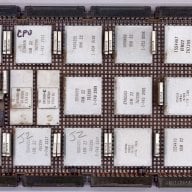
'Rape' seems a little overstated, a small incision at the edge allows the overhanging part to be bent upwards and you can simply bend it back into place before you put the cover back on.
Not a big fan of using that point for 3.3V, there's a few beefier caps that seem like the supply comes from a bigger trace and should be more robust to solder onto, but the dimension changes look like a slight improvement indeed.
Not a big fan of using that point for 3.3V, there's a few beefier caps that seem like the supply comes from a bigger trace and should be more robust to solder onto, but the dimension changes look like a slight improvement indeed.
So I’m just reinstalling a new chip and while everything was all still disassembled I powered it on and booted to hekate!!!! Then I assembled everything and screwed it all back together and now it flashes purple and then red!!!! What the heck….. could I have damaged something when reassembling?
After being announced last week, the first of two broadcasts is set to go live later today with a stark focus on The Legend of Zelda and its 40th anniversary...
It's that time again folks, an update for the Switch and Switch 2, and a surprisingly big one at that! At lease for folks on the Switch 2. The most notable feature...
It is with a heavy heart that I announce the departure of our beloved Chary from the position of Chief Editor. Chary took over early 2021 and has done a wonderful job...
The second of a two-part special, a more traditional Nintendo Direct is set to air today. Unlike the Zelda Direct the contents of this one is still relatively up in...
Over the weekend a number of Switch and Switch 2 related subreddits came alive with people reporting bans on their Switch 2 consoles out of nowhere. The error code...
After an accidental leaking of their review video from Linus Tech Tips last week, we somewhat knew that news on Steam's latest VR venture was imminent. Today the...
After more than a year, Mario Kart 8 Deluxe has gotten a fresh update with a focus on the Switch 2, and it's surprisingly meaty. For those Switch 2 players, they'll...
Announced a few days ago, Nintendo of America have today launched their Customer Appreciation Sale. Featuring 30% discounts across a wide range of popular first-party...
It's been something of a quiet week in the gaming space, with the deluge of big hitters trying to find their place before GTA 6 launches really kicking off next week...
A few days ago Chary stepped down as Chief Editor after 5 wonderful years, and everyone guessed the seat wouldn't stay empty for very long. Back in 2021 I proudly...
After being announced last week, the first of two broadcasts is set to go live later today with a stark focus on The Legend of Zelda and its 40th anniversary...
It's been something of a quiet week in the gaming space, with the deluge of big hitters trying to find their place before GTA 6 launches really kicking off next week...
It is with a heavy heart that I announce the departure of our beloved Chary from the position of Chief Editor. Chary took over early 2021 and has done a wonderful job...
The second of a two-part special, a more traditional Nintendo Direct is set to air today. Unlike the Zelda Direct the contents of this one is still relatively up in...
After an accidental leaking of their review video from Linus Tech Tips last week, we somewhat knew that news on Steam's latest VR venture was imminent. Today the...
Announced a few days ago, Nintendo of America have today launched their Customer Appreciation Sale. Featuring 30% discounts across a wide range of popular first-party...
A few days ago Chary stepped down as Chief Editor after 5 wonderful years, and everyone guessed the seat wouldn't stay empty for very long. Back in 2021 I proudly...
From my post earlier this week you probably already know which game I'm talking about. Fire Emblem released yesterday to some pretty rave reviews. Looking at...
The in-progress Switch port of the 2013 Rockstar Games Grand Theft Auto V has been forced to end progress after Take-Two Interactive has threatened legal action...
A court has ordered Reddit r/SwitchPirates moderator James Williams (of ArchBox fame) must pay Nintendo $4.5 million in a default judgment for copyright infringement...