I don't know if anyone has posted this, but it might come in handy.
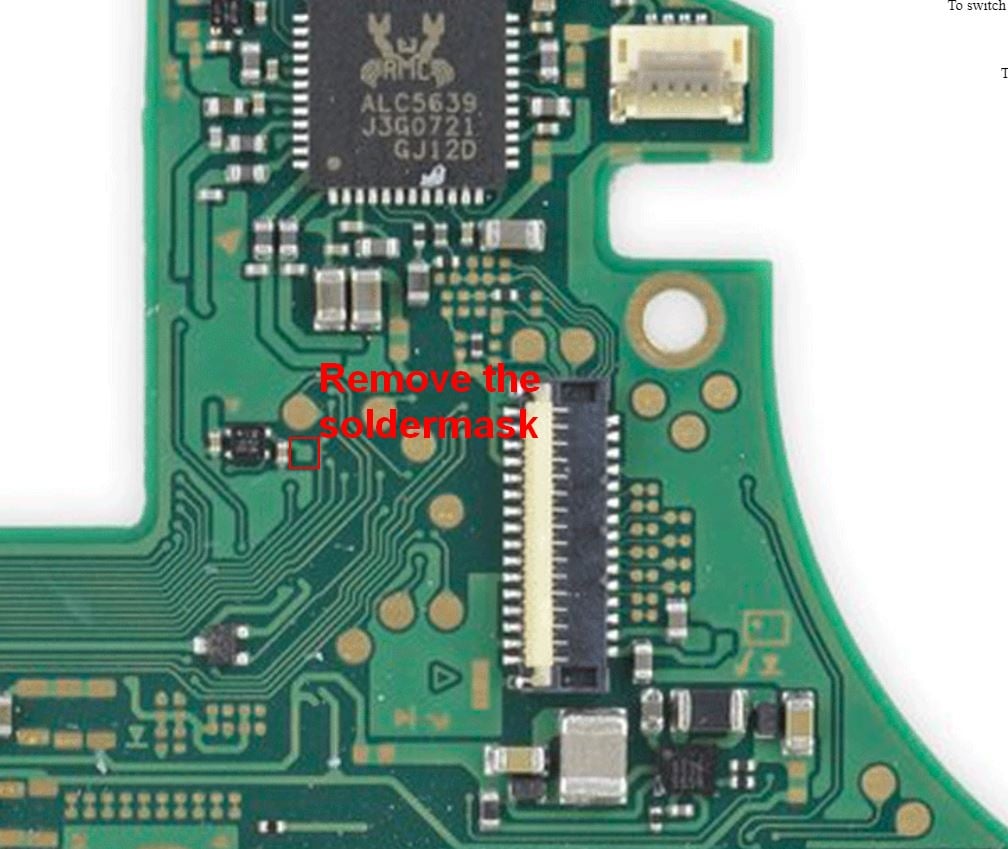
The 3.3V pin on the Switch Lite is very small. You can make it easier by soldering yourself to the place next to it.
A capacitor is usualy placed between VCC and Ground to smoothen or to reduce noise/ripple.
So one side is positive voltage, the other side is ground. If you've damaged the trace or accidentally removed the cap then it's probably ok to leave it as is without the capacitor, it could cause instability though. But you don't want to bridge the 2 pads. Bridging these will cause a short cirquit and will cause damage to the system.
I tried to bridge those pads without capacitor, but that was after the Switch Lite doesn't boot.
Is It dead or can a professional repair it? I was talking with a guy who repair Switch consoles. He told me my Nintendo should power on without this capacitor so he needs to check everything in motherboard carefully.
I don't know if anyone has posted this, but it might come in handy.
The 3.3V pin on the Switch Lite is very small. You can make it easier by soldering yourself to the place next to it.View attachment 364491
Just done a Friend's OLED.
I think I'm doubling my install price for these holy moly Batman! That DAT0 is a PITA.
And to get it reliable so I don't get any comebacks... took 3 attempts (had to buy a SMD air heater).
Finally cracked it by this method...
Added flux around whole eMMC, Started of 90c 1 min, then 150c 1 min, 200c 1 min, added more flux, then finally 260c 1 min and lots of flux.
Checked the solder point and got around 0.600 odd on the diode tester.
Boots everytime now. Tried 2.5 first, then when I was happy, updated to 2.6 and removed usb & both buttons.
Pretty chuffed, used to do SMD, but soldering under microscope, never used air.
Post automatically merged:
Is there a cad file I can send off to produce some picofly flex's yet?
got my flex from ali after 2 weeks waiting,
nuke flash rpi to 2.64 directly
v2 toshiba , first boot 3 minutes now like 5 sec.
check all works good , backup etc etc. remove port and button and shorten the cable.
I tried to bridge those pads without capacitor, but that was after the Switch Lite doesn't boot.
Is It dead or can a professional repair it? I was talking with a guy who repair Switch consoles. He told me my Nintendo should power on without this capacitor so he needs to check everything in motherboard carefully.
Hard to say if it's dead or not. I don't know where that 3.3v line come's from or where it goes to.
My field is laptop motherboard repair, I don't have experience with switch motherboards.
Maybe it's only the black component to the left of the missing cap that's damaged, maybe your 3.3v voltage regulator is damaged. Somebody that has experience with switch motherboards might be able to help you.
You say the wire disconnected when you assembled the switch. When you resoldered the wire, did you have the battery still plugged in?
Hard to say if it's dead or not. I don't know where that 3.3v line come's from or where it goes to.
My field is laptop motherboard repair, I don't have experience with switch motherboards.
Maybe it's only the black component to the left of the missing cap that's damaged, maybe your 3.3v voltage regulator is damaged. Somebody that has experience with switch motherboards might be able to help you.
You say the wire disconnected when you assembled the switch. When you resoldered the wire, did you have the battery still plugged in?
In my opinion, better be from the side, because you need not to put the cable near the heat stick, and secondly do not need to take of the gamecard flex cable, which without a good handle, might broke the connector.
Unfortunately i know it recently. I've already used 3.3v from the top according to the sthetix diagram. If i could redo the time, i will put it on the side.
Unfortunately, I also soldered from the top to the capacitor, which kept breaking my connection. I didn't know about the sideways method. In my opinion, both solutions are better than soldering to the capacitor.
The 3.3V cap soldering point is a dangerous point,this tiny cap is super fragile and easily broken and missing by soldering heat built up by seconds.The 3.3V wiring diagram mess up the micro soldering work.Just use the alternate point.
V1 ribbon cable on Mariko. Works perfectly with V2 console.
I will definitely be more "gentle" with a ribbon cable next time. This one was just for the science.
It’s about that time of year again where I check in with the community to see if we can get the front page aligned with what people are interested in knowing and what...
WiiCompiled is a new project that lets PC gamers play Mario Kart Wii natively on PC without emulation. Using static recompliation to convert the code into native PC...
The long awaited Grand Theft Auto VI Extended Look gameplay trailer has finally dropped on YouTube. As you all know, it had dropped 6 hours earlier on Netflix, and...
After being announced last week, the first of two broadcasts is set to go live later today with a stark focus on The Legend of Zelda and its 40th anniversary...
Thanks to the recent decomplication efforts; The Minish Cap 3DS brings the Game Boy Advance classic Zelda title to your 3DS.
The port takes full advantage of the 3DS...
In the wake of Sony's shift to a digital-only ecosystem within the next year, Xbox have today announced a surprising scheme. Aiming to offer physical buyers the same...
It is with a heavy heart that I announce the departure of our beloved Chary from the position of Chief Editor. Chary took over early 2021 and has done a wonderful job...
It's that time again folks, an update for the Switch and Switch 2, and a surprisingly big one at that! At lease for folks on the Switch 2. The most notable feature...
GBAtemp is and always has been an independent community. Since 2002 our staff have voluntarily kept the site running, added new forums, features, provided constant...
The second of a two-part special, a more traditional Nintendo Direct is set to air today. Unlike the Zelda Direct the contents of this one is still relatively up in...
It’s about that time of year again where I check in with the community to see if we can get the front page aligned with what people are interested in knowing and what...
After being announced last week, the first of two broadcasts is set to go live later today with a stark focus on The Legend of Zelda and its 40th anniversary...
It's been something of a quiet week in the gaming space, with the deluge of big hitters trying to find their place before GTA 6 launches really kicking off next week...
In the wake of Sony's shift to a digital-only ecosystem within the next year, Xbox have today announced a surprising scheme. Aiming to offer physical buyers the same...
The long awaited Grand Theft Auto VI Extended Look gameplay trailer has finally dropped on YouTube. As you all know, it had dropped 6 hours earlier on Netflix, and...
It is with a heavy heart that I announce the departure of our beloved Chary from the position of Chief Editor. Chary took over early 2021 and has done a wonderful job...
The second of a two-part special, a more traditional Nintendo Direct is set to air today. Unlike the Zelda Direct the contents of this one is still relatively up in...
After an accidental leaking of their review video from Linus Tech Tips last week, we somewhat knew that news on Steam's latest VR venture was imminent. Today the...
Announced a few days ago, Nintendo of America have today launched their Customer Appreciation Sale. Featuring 30% discounts across a wide range of popular first-party...
A few days ago Chary stepped down as Chief Editor after 5 wonderful years, and everyone guessed the seat wouldn't stay empty for very long. Back in 2021 I proudly...








 holy moly Batman! That DAT0 is a PITA.