

Since my ioQuake3-Wii and my ioQuake3-PS3 ports are in a pretty good shape, my latest release is a PS4 port of said game. Like others, It's perfectly capable of crossplaying with other Quake 3 Arena clients. Like the PS3 client, it also has on-screen-keyboard support. Like my other Quake3 ports, community devkits (in this case OpenOrbis) have been used.
AI has been used to assist me in this project.
You can open the console in-game with L1 + Touchpad and the chat with R1+Touchpad. (It will bring the keyboard but the button combo will either send the command on console, or chat, depending on your L/R press)
MAIN FEATURES:
Installation
Quake III Arena
Place pak0-8 in data/ioq3/baseq3/ from your own Quake III Arena copy.
Open Arena
Place all the pak files in data/ioq3/baseoa/ from your own Open Arena copy.
Team Arena
Place pak0-3 in data/ioq3/missionpack/ from your own Team Arena copy.
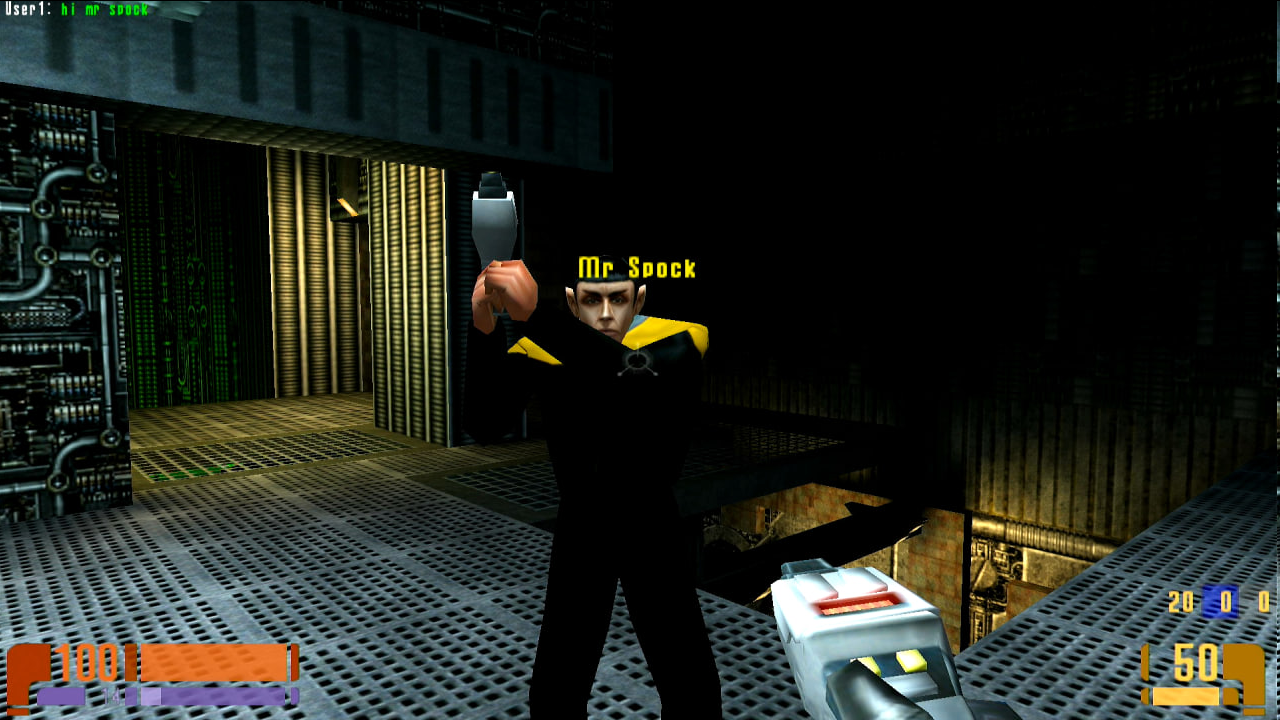
Star Trek Voyager: Elite Force
Place all the pak files in data/ioq3/baseEF/ from your own Star Trek Voyager: Elite Force copy.
Quake 3 Classic
Place pak0-8 in /data/ioq3/baseq3/ from your own Quake III Arena copy, as well as dc-mappack.pk3 inside baseq3
Latest release
RELATED PROJECTS:
ioQuake3-Wii
ioQuake3-PS3
ioQuake3-One


AI has been used to assist me in this project.
Hardened code's skill module is mandatory. Without it, AI will hallucinate a lot and will either introduce issues or regressions.
Sonnet 4.6 did good chunk of the work code-wise. It would often struggle with more advanced things (ex. renderer). If it struggled or introduced regressions when implementing something, I would instantly swap to Opus to continue
Opus 4.6 does the much more complex stuff, then code review and comment trimming.
Codex although not mandatory does the double check on code.
Sonnet 4.6 did good chunk of the work code-wise. It would often struggle with more advanced things (ex. renderer). If it struggled or introduced regressions when implementing something, I would instantly swap to Opus to continue
Opus 4.6 does the much more complex stuff, then code review and comment trimming.
Codex although not mandatory does the double check on code.
You can open the console in-game with L1 + Touchpad and the chat with R1+Touchpad. (It will bring the keyboard but the button combo will either send the command on console, or chat, depending on your L/R press)
MAIN FEATURES:
- Touchpad aim (Enable with L3+Touchpad)
- Name is taken from the console's Username on boot
- Lightbar will pulse when below 50% health
- Rumble support (enable/disable with L3+R3)
- Mod support
- Standalone Open Arena, Star Trek Voyager: Elite Force (Holomatch) and Team Arena support
- Additional "Classic" build for Dreamcast crossplay.
Installation
Quake III Arena
Place pak0-8 in data/ioq3/baseq3/ from your own Quake III Arena copy.
Open Arena
Place all the pak files in data/ioq3/baseoa/ from your own Open Arena copy.
Team Arena
Place pak0-3 in data/ioq3/missionpack/ from your own Team Arena copy.
Star Trek Voyager: Elite Force
Place all the pak files in data/ioq3/baseEF/ from your own Star Trek Voyager: Elite Force copy.
Quake 3 Classic
Place pak0-8 in /data/ioq3/baseq3/ from your own Quake III Arena copy, as well as dc-mappack.pk3 inside baseq3
Latest release
RELATED PROJECTS:
ioQuake3-Wii
ioQuake3-PS3
ioQuake3-One
Last edited by Mayo1990,