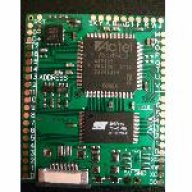
For all the people complaining about input lag or video lag, here is something to think about.
Despite there being a fairly powerful CPU and ram built into the card, there is still the transfer speed between the DS and the slot 1 card which severely limits the effective power. For the games with minor lagging, they are probably already emulating full speed but appear laggy due to the slow transfer. While this concept may not seem obvious to the average user of applications, as a developer with the SDK, it is not hard at all to create a laggy product. Just transferring 2 screens worth of data effectively slows the cards performance down by 50% regardless of its cpu speed because of the transfer speed of the slot one. So I'm sure you can imagine, and do see the same issue with transferring audio along with video.
Basically what I'm saying is you may never get full speed - none laggy emulation with audio and video due to the speed between the slot 1 and the DS itself. The gba emulator from what I have tested is as good as can get for the hardware, if not a few optimizations to decrease slowdowns, and I have yet to test the snes emulator but I suspect the same issue.
So there is no need to bash the Supercard team for being lazy or horrible programmers, they are just merely making the best of the situation and working around the DS's and the Supercards limitations.
Hopefully this gives a little more insight in the situation of the emulators and maybe some people may appreciate the products for their amazing performance despite these short comings rather then criticizing without knowledge.