Wii U is definitely a difference case from regular emulation since it has the localization ability to run gamecube games. As where "emulation" would require much more impressive hardware to render it in true 1080p at a decent framerate. Usually a computer that is 5-6 times more powerful than the original hardware it's emulating. Or more possibly. So you won't see a "decent" gamecube emulator on the PS4 or Xbone for that reason alone. And I know they aren't out yet, but they have already shown their specifications.
But to try to make the Wii U run a Gamecube game in 1080p, probably would require an emulator instead of running the Wii Hardware. These guys are faking the vWii hardware into thinking the Gamecube ability is still there. And all it knows how to do is run them in 480p at best. The only other 2 scenarios to make this happen I think it to hack to Wii U mode, and make it be able to use the vWii hardware abilities. That or when (or if) Nintendo actually releases Gamecube VC games and IF they make them run in 1080p, do a VC injection to run other games...
And sadly I don't see Nintendo doing that... They saw how Sony cashed in on HD remakes...
But this is all speculation. And I never said "can't"... I said unlikely. But I've been pleasantly surprised before!
Actually, true emulation, where all the entire architecture is emulated transistor-for-transistor generally takes a lot more power than "5-6" times the total FLOPS or whatever measure you want to use. If someone, for instance, wrote such an emulator for the Nintendo 64, it would probably struggle to run at full speed on the fastest consumer computers today.
Usually game emulators, since they do not require precise emulation, use a number of shortcuts to get around the performance bottlenecks. It usually works out to some version of dynamic recompilation of instructions written on one processor architecture to another combined with interpretation of microcodes in such a way to implement them most efficiently on the current system. For instance, a Nintendo 64 emulator, instead of actually running the code on simulated processors and allowing those processors to render the graphics at their native resolution, then taking the bitmapped output and writing it to the screen (like an actual Nintendo would have done) will recompile the code and use something like Direct X to implement the instruction set. Thus, if they see a "draw a line" instruction, the emulator will have Direct X draw a line.
The Wii U uses the exact same processor architecture as the gamecube, so it should require absolutely no emulation of the CPU instruction set. It only has to be virtualized, just like 32 bit versions of windows have a built in ability to run 8 bit DOS code in a virtual machine. The only thing that would need to be emulated would be hardware components that existed on the gamecube but do not exist on the Wii U. Given that the Wii U has a three core processor, these could be run on other cores with no problem. To render graphics in 1080p, all you would need to do is write a new routine to act like the gamecube GPU and then render those instructions in full vertical resolution.
It would not suddenly give the gamecube HD graphics. What it would do would be to render things like polygons and their textures at the native resolution of the televisions that are common today rather than stretching them, which would reduce jaggedness and pixilation. However, to do this on the Wii U, it would require access to the full hardware rather than the virtualized environment of the vWii, unless some workaround could be found. Nintendo obviously has full access, so when gamecube games come to the virtual console, it would be an absolute travesty for them not to be in HD. Hopefully Nintendo will consider providing new textures and upping the polygon count like some retro releases on the PS3 and xbox have done.





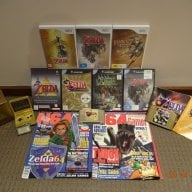

 I think that's how it goes...