Why is e-Ink so slow

I'd presume a combination of the nature of the technology and it's intended purpose, where the refresh rate isn't important i.e. reading books.

Which device are you using? IIRC Kindles have a setting where it can delay doing a full screen refresh at the cost of quality.
 
What are you using that has a refresh rate of a frame per five seconds? I've got a good number of e-ink devices and none are that slow, even when doing full screen refreshes to clear the ghosting. Those tend to be like a second at most.
 
One frame in five seconds sounds like you're either overheating the device somehow, or if it's second-hand it's starting to fail.
However e-ink is fairly slow due to it being literal oil filled cells that have to be rotated via an electro magnetic field, and that naturally takes longer than having a small current twist a couple crystals around to block light.
 
  • Like
Reactions: emcintosh
One frame in five seconds sounds like you're either overheating the device somehow, or if it's second-hand it's starting to fail.
However e-ink is fairly slow due to it being literal oil filled cells that have to be rotated via an electro magnetic field, and that naturally takes longer than having a small current twist a couple crystals around to block light.
It was kind of an exaggeration. I was wondering why there weren't 12 fps e Ink displays at this point
 
It was kind of an exaggeration. I was wondering why there weren't 12 fps e Ink displays at this point
There are as far as I know. E-ink screens can actually refresh pretty fast (I think 15-20fps is fairly common, but there are probably some faster out there). The drawback is that the faster you're refreshing on these displays, the worse the image quality gets over time as the screen doesn't have time to fully clear the previous image. That causes ghosting. There will be people here who I'm sure can give better explanations, but that is the gist. Such a "high" refresh rate would be fine if you wanted to watch a video in a pinch on one of those devices, but if you wanted to read manga or something, the ghosting would probably make the experience pretty bad.

 
There are as far as I know. E-ink screens can actually refresh pretty fast (I think 15-20fps is fairly common, but there are probably some faster out there). The drawback is that the faster you're refreshing on these displays, the worse the image quality gets over time as the screen doesn't have time to fully clear the previous image. That causes ghosting. There will be people here who I'm sure can give better explanations, but that is the gist. Such a "high" refresh rate would be fine if you wanted to watch a video in a pinch on one of those devices, but if you wanted to read manga or something, the ghosting would probably make the experience pretty bad.
Thanks
 
E-ink is balls.

:mellow:


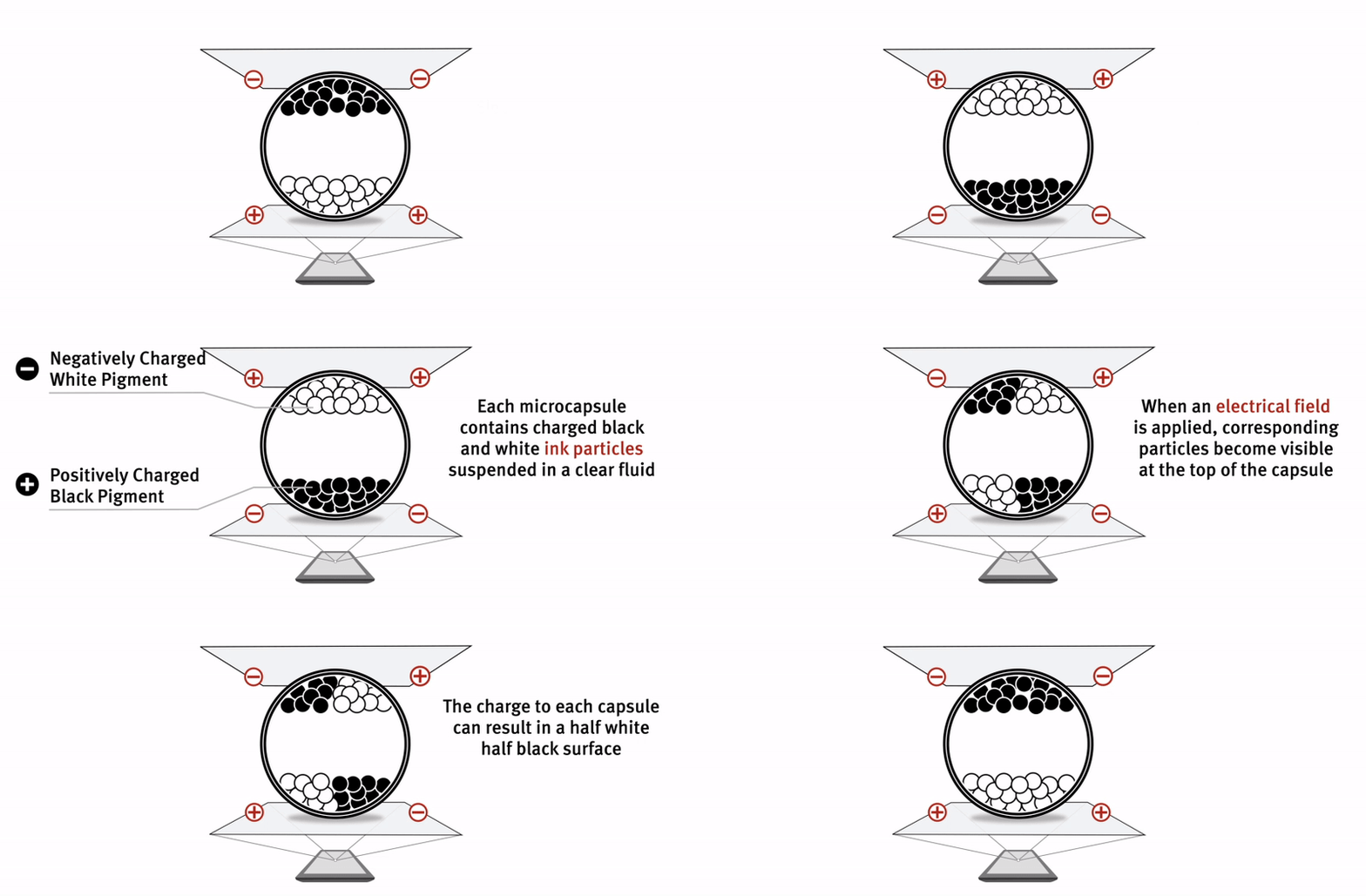
e-ink screens are made of tiny capsules filled with electrostatically charged pigment particles that are controlled with an electric charge.


zwei-pigment-tintensystem.gif


And this change takes longer than a regular screen.

But there's another reason e-ink screens are slow. Each time the charge changes, some of the pigment particles stay stuck on the wrong side, and after a few dozen changes the entire capsule is just gray. So to prevent this, the entire screen flickers a few times between page changes to "reset", before displaying the next page. This is a feature that can be disabled if you want to get a slightly faster refresh rate at the expense of ghosting and blurring (or if the flickering drives you insane).
 
The refresh rate of e-ink has really been improved in the last ~10 years. If you think modern screens are slow, then you really do not want to use a Kindle from the early 2010s. :P
 

Site & Scene News

Popular threads in this forum