Okay, I was plugging something into my TV's AV input, and next to the inputs, I found one that says "Service", and it looks like an AUX input, there's a picture.
I remember on my oldie LG LCD TV there's "Service," but it was a USB port and meant to update it.
Still, seeing that for some reason reminded me of Hotel TVs and their weird ports you couldn't use. Well, now you can since it's HDTVs (it was an issue with their CRTs).
Probably just wired internally as a USB port and uses a 3.5mm Headphone jack to make it harder for people to use for themselves so you have to rely on their overpriced repair services if something goes wrong with the firmware.
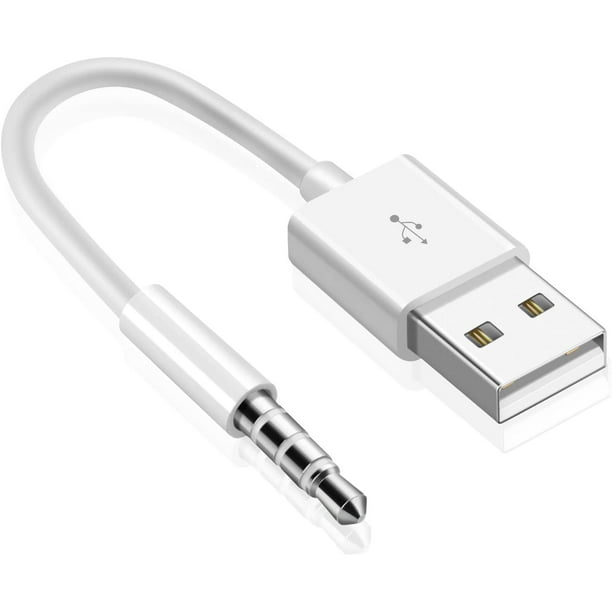
Headphone jacks as USB ports isnt exactly unknown, since the old square iPod Shuffle did that too. Headphone jack doubled as it's USB connection, and it came with the following cable:
when I looked at this, and judging from where it's positioned, I thought it was for you to hook up one of those ypbpr to AUX, but since I don't have one of those, I can't try it.
when I looked at this, and judging from where it's positioned, I thought it was for you to hook up one of those ypbpr to AUX, but since I don't have one of those, I can't try it
I don't believe so, no. The TV in my living room has a port for that, both Component and Composite, and they are labelled as such. The fact that this is labelled specifically as SERVICE tells me it doesn't have any General use applications.
Typically it is an usb port, it allow technician to troubleshoot the tv, as for the 3.5mm cable goes, it is probably 3.5mm audio jack to db9 rs292 for troubleshooting.
As Elodain and Hayato213 said it is likely something for a technician or failure analysis type to hook up to.
Modern ones are likely to be USB, though some older ones are giant pin connector cards (think CF card but larger, or PCMCIA if you are old like me). 3.5mm or likely quad ring of that size could be USB but more vintage ones might well be JTAG, i2c or something in the http://dangerousprototypes.com/docs/Bus_Pirate / http://dangerousprototypes.com/docs/Open_Bench_Logic_Sniffer world so someone with a custom setup on a test bench somewhere could figure things out when a warranty call came in, and possibly program something if the largely same model but different digital TV encoder was needed to reprogram a bunch of things if a rush order came in from somewhere in the world (say some random Danish or whatever buyer for a shop smokes all the crack and says we will take 30000 when you had expected 5000 for that region you redirect a bunch of your aimed at the US market that you were going to have a hard time getting a bulk purchaser for).
As far as usefulness. If you can figure out what protocol it is then there could be some fun to be had, especially if you can dump (assuming there is no restore/update on a website somewhere) and reflash a firmware with different data or access some kind of settings -- different colours (I once had a glorious widescreen CRT but for some reason best known to itself then 4:3 mode put grey bars down the side rather than black with no way to change in menu), different colour settings, disabling settings you don't want (give me game mode on everything rather than just VGA or something), different ordering/startup, possibly removing protection (macrovision and HDCP being the two most likely). I don't know what I want to link for this sort of thing as as primer as TV hacking is not really much of a thing like this, however they will also behave much like any embedded device so dump memory/firmware and read any strings out you can find to look to as commands, if it is JTAG or something then see what there is by way of default/expected/help commands. If it is proper JTAG then you are probably going to be hard pressed to brick it (though do check to see if there is a nice EEPROM settings chip you can dump and restore) but some of the higher level stuff like USB and serial based stuff is probably going to be more able to brick things.
Developer pepsipu has released technical details for a userland exploit for the Nintendo Switch 2 called ns2jb.
If credible, this is the first software-only, tethered...
Before Thursday, the Switch 2 jailbreak scene was basically non-existent and was even a bit of a running joke. But a single tweet from researcher pepsipu changed all...
May the good times continue in the Switch 2 homebrew scene! Released today by developer Gezine, CivSwitch offers a new entrypoint for homebrew on the system, this...
The Legend of Zelda: Ocarina of Time, the Switch 2 remake has been dumped and is already booting and playable on high-end PCs running on Lichii, an experimental...
The next Nintendo Switch 2 update is here, 23.5.0 (shared also with Switch 1), and with it a fix for the recent FS exploit. If you are interested in homebrew you are...
It's been a turbulent few weeks in the game porting space. We've seen gaming worlds smashed together, as well as games being statically recompiled for every platform...
The Switch 2 scene is moving quickly, and today marks another significant achievement with the release of KaiHEN改变! Kurumuz, who also authored a more stable version...
It's been something of a wild few weeks in the Switch 2 space. For those of you not keeping track, we've seen the first exploit released, utilising SmileBASIC as an...
Announced back in May, Pokemon Monomyth is a brand new ROM hack based on Pokemon Emerald that's more than six years in the making. I hear the cries already, another...
The devs behind Azahar, the 3DS emulator that spawned out of Citra (which was taken down in 2024 after Nintendo went after its developers) has announced that they...
Developer pepsipu has released technical details for a userland exploit for the Nintendo Switch 2 called ns2jb.
If credible, this is the first software-only, tethered...
May the good times continue in the Switch 2 homebrew scene! Released today by developer Gezine, CivSwitch offers a new entrypoint for homebrew on the system, this...
GBAtemp is 24 today!
2 decades, 4 years and still kicking it
It is with a real sense of pride in my chest that I can announce GBAtemp.net has turned 24 today (well...
The review embargo for Rockstar Games' Grand Theft Auto VI lifted today and the verdict is about as close to unanimous praise as it gets.
With more than 145 critic...
According to Fortune, internal projections at Microsoft place the RRP of Microsoft's upcoming Project Helix somewhere between $1200-1800 USD when it releases in the...
Grab your tunic and ocarina, The Legend of Zelda: Ocarina of Time remake lands today on Nintendo Switch 2!
Reviews are looking good with the game sitting on a 95 on...
A collector named Daniel Quadri says he owns what is believed to be the only known playable copy of PokéPark: Tsuri Taikai, also known as PokéPark: Fishing Rally...
Before Thursday, the Switch 2 jailbreak scene was basically non-existent and was even a bit of a running joke. But a single tweet from researcher pepsipu changed all...
Electronic Arts has announced it is shutting down BioWare, who were founded in 1995 and bought by EA in 2007 as part of a wave of layoffs and project cuts. They are...
The Legend of Zelda: Ocarina of Time, the Switch 2 remake has been dumped and is already booting and playable on high-end PCs running on Lichii, an experimental...