 Cairn GBAtemp review
Computer
Product Information:
- Release Date (NA): January 29, 2026
- Publisher: The Game Bakers
- Developer: The Game Bakers
- Genres: Adventure, Survival
- Also For: PlayStation 5
Game Features:
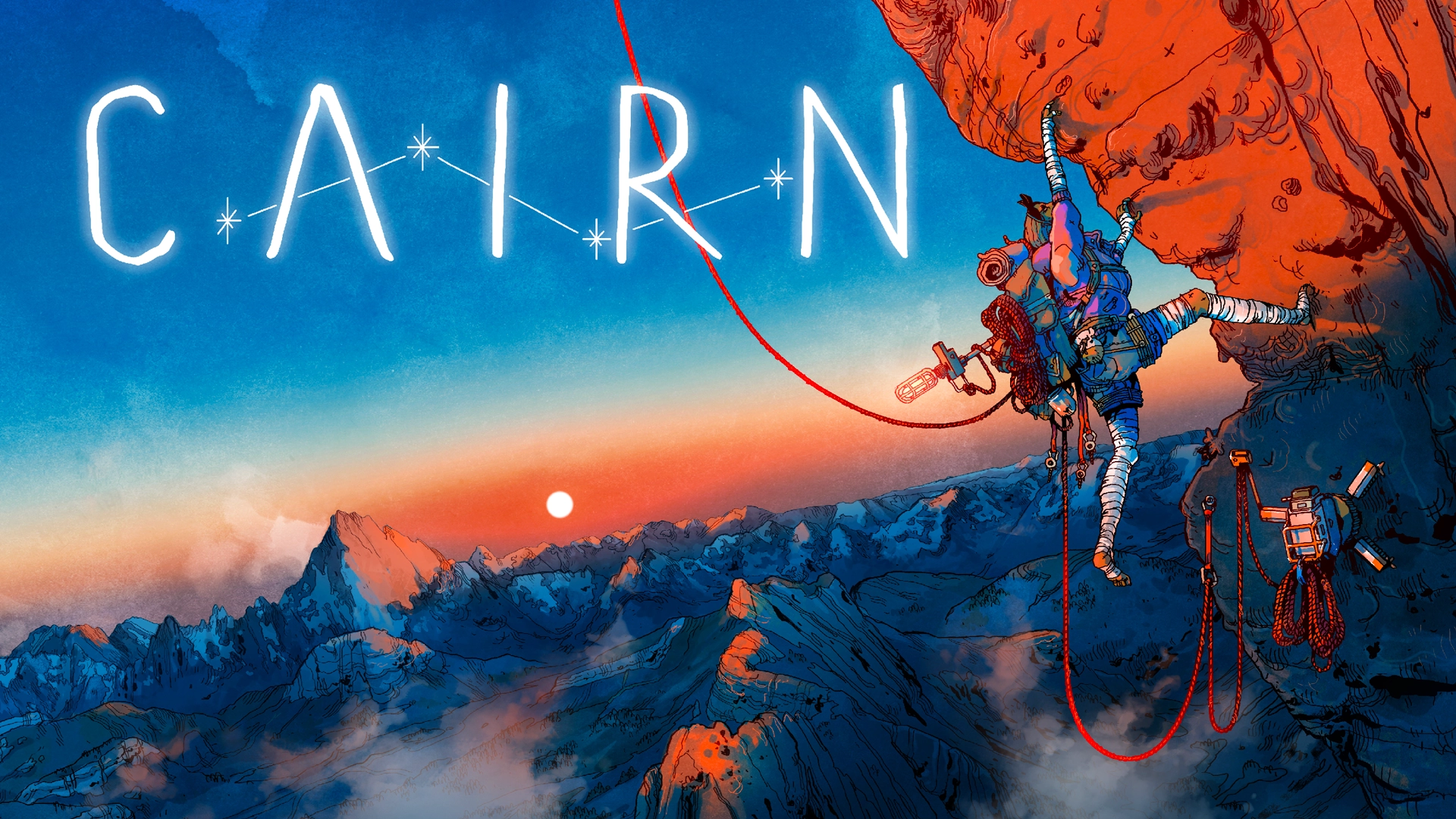
Climbing is a complex and technical sport, making it seem impossible to translate into the video game format without oversimplifying it. However, Cairn somehow manages to replicate both the physical and mental aspects of climbing almost perfectly. This game is a patient journey that explores the beautiful and brutal nature of rock climbing.
The culture of rock climbing is pushing limits, climbing harder grades, and exploring the natural rock we live on. As Aava, you embody all of this as she attempts to climb Mount Kami where no one has reached the peak and has claimed many lives. This is a big achievement many real climbers strive for, but a big question that this game asks is whether the sacrifices are worth it. Throughout the story, you find out whether Aava and you have what it takes to make it up.
On the surface, the game could be seen as reminiscent of some Foddian games, as you can quickly lose climbing progress in the blink of an eye. But it’s closer to Death Stranding with the patience you need and the way the environment forces you to plan ahead instead of just reacting fast. While most games will have you “climb” by spamming a jump button on clearly marked ledges, Cairn has you do it literally limb by limb. If that sounds like a long and tedious process, it is, but it is also the beauty and magic of the gameplay. You look at cracks, gaps, holes, and ledges in the walls and find your own ways to climb up. No yellow tape to guide you, just whatever the mountain has laid out. As this is a game, you will likely find some achievable way to complete a route, but there are times where you can spend many minutes committing to a planned route only to discover a dead end, where you need to rappel back down and start again.
What I love about the game is how methodical you need to be about each movement in the climb. Much like real rock climbing, efficient moves are more important than fast moves, especially when climbing for long stretches. You can throw up each of Aava’s limbs recklessly and hope it creates enough tension to inch upward, but more often than not, moving too fast results in you slipping and falling. Taking it slow and thinking about the power and physics of each move makes the longer climbs feel so much more rewarding. However for players wanting more "action", this can also feel limiting because more dynamic and powerful moves, such as "dynos" (big jumping moves), are not possible in this game.
Anyone who has rock climbed will notice that Aava is incredibly strong and skilled to be able to endure the movements in this game. While this can just be explained as a crutch for the gameplay’s enjoyment, it also gives an indirect backstory to Aava. She is a pro and veteran climber who has sacrificed much of herself to get where she is. While she is famous for her abilities, Aava isn’t exactly the friendly hero type either. Throughout the climb, you get calls and voice messages from people back home, including her agent, Chris, and her partner Naomi, and Aava constantly avoids them or shuts them down. It gives this feeling that the climb is not just about proving she can do it, but also about escaping everything she doesn’t want to deal with. At one point, Aava meets another climber on the mountain named Marco. He’s younger, upbeat, and even a fan of her, but Aava treats him with more annoyance than anything. The game doesn’t force you to like her, but it does make you curious about why she is the way she is, and why she wants to keep going up when every logical part of the world is telling her to stop.
There is survival management here, and it is way more important than I expected. Food and water aren’t just an afterthought, they will change how aggressive you can be with your route choices. If you’re high on hunger or low on water, you start feeling pressure to detour and scavenge. Because if you zero out on these meters, Aava can die. When in your tent, you can cook items found on your journey with its mechanics being similar to Breath of the Wild. There were times when I made significant progress on a climb, but I ran low on supplies, so I needed to rappel down and resupply instead of finishing my route. This tension creates a constant internal debate between playing it safe and being more aggressive. Health matters too. You take damage from falls, and if you ignore it, it catches up to you. Weather isn’t just aesthetic. Cold, wind, and rain add a layer of urgency because the elements only make a stressful part of the climb worse. It all stacks together until you realize you’re not only working with a puzzle on the wall, but also you’re fighting time and your own body.
There is also much to explore in this game, past just getting to the peak. As you climb Mount Kami, you find remnants left by other climbers who didn’t make it, and you also start seeing signs of an ancient civilization called the Troglodites. You climb past structures, statues, and markings that show the mountain has a history that existed long before Aava showed up. The game never really forces you to stop and learn about these people, but just the presence alone gives you an urge to learn more on your own. In fact, some of the detours you can make can be rewarding and also more of a challenge to those that seek it.
In real life, I love rock climbing, and I do it 4–5 times a week for hours at a time, but I hate falling. That fear of falling is translated insanely well in this game. You can spend 20 minutes up one path, and one bad fall can send you way back down or force a reset to a much lower point. That’s what makes Cairn feel so real. The amount of effort poured into a climb results in genuine stress when you are barely making it to the top. You start climbing in a way where you don’t want to risk anything because you know how annoying it is to lose progress.
I primarily played this game on the Steam Deck. Performance-wise, it did not do too well at native resolution. On low–medium settings, I was sitting around 15–27 fps. However, because the pacing is slower and the game doesn’t require fast reaction time, it still played fine overall. The graphics on display look great at all graphics presets but I do wish it was more optimized.
While very complex and intuitive, there is still some jankiness to the gameplay. As a rock climber, the automatic hand placement system messed up often enough to be annoying, and while the falling ragdoll physics while on a rope is fun, it can sometimes be a bit glitchy. There was a time when I was exploring a cave while still attached to an anchor a decent distance away, but when I fell into a big gap, the rope glitched through the wall, and the game had a hard time figuring out how to calculate the physics of it all. These types of moments are short-lived and do not occur often.
Cairn is a game that anyone can get into, climbers, non-climbers, veteran gamers, and even complete newbies. The indie studio has found a way to capture a real sense of pride, accomplishment, and fear in a welcoming package. While the story isn’t the main draw of this game, the undertones of depression, loneliness, and isolation feel very real, and lots is said without any words being spoken. In a world of instant gratification, Cairn is a game that people should take some time to play.
Verdict
- Great and Intuitive Climbing Controls and Mechanics
- Beautiful Scenery
- Rewarding Climbs
- Immersive Soundtrack
- Truly Tenseful Gameplay
- Sometimes janky auto-grab system
- Lack of more dynamic climbing movements
- Glitchy rope and belay