

Notice of Abandonment: I have been working on this paper for a few months, and I have gotten deeper into the subject than I am able to manage. I explain that more as I go along, but it became clear I lacked the effort required to reach a satisfying conclusion. I think the information that I have gathered is worth posting as is, but I knew I'd never reach an endpoint I would be perfectly happy with. Below is my project as it is. I cleaned it up to make it mostly coherent.
Hi. I am the weirdo who purchased every DS and 3DS console solely to measure their screws for reasons that aren’t important to this post.
Before I get into said post, I want to highlight some sources that were immensely valuable to this project. These sources served as the backbone on which I could build off of, and I couldn’t have done it without them. They are worth reading.
For starters, there is no such thing as a “Phillips” or “JIS” screwdriver, as odd as that sounds. Crosshead screwdrivers are commonly known as Phillips, but those drivers can be made with different manufacturer standards; JIS is one such standard. The answer is not “Dumping your Phillips and buying a JIS”; rather, following the good advice of “Getting what you pay for”, purchase quality tools from reputable manufacturers, and you are less likely to damage screws.
Though it pains me dearly, I couldn’t reach a satisfying answer since the deeper I went, the more complicated and unwieldy the topic got. In the end, my lack of engineering knowledge and means of passing paywalls left this paper in the uncompleted state that it is in.
DISCLAIMER
I need to slap a few healthy disclaimers here at the beginning:
PDFs appear very frequently, and I will be labeling them in two, hopefully obvious ways:
Sources argue that either:
Independent bloggers, YouTubers, and everyone seem to have an opinion on whether a JIS screwdriver matters when working on Japanese products.
Even IFixIt, who speak about the differences of JIS and Phillips, and even sells JIS and Phillips Driver bits, can’t decide whether the lower shell screws of the New 3DS XL and New 3DS use the same screw heads!


Here is an image of those two exact screws from a New 3DS XL and a New 3DS. Can you tell me which one is the JIS #00 of the New 3DS XL and which one is the Phillips #00 of the New 3DS?

I cannot.
Or how in the DSi Dual Camera Assembly guide, the driver used swaps from Phillips to JIS for seemingly no reason halfway through, which are somehow different from the same screws used in the DSi XL.


Or the complete and utter madness in the 3ds Lower Case Screw comment section, where PH #00 works fine for some and destroys the screws for others.

Or how in the New 2DS XL guide, J00 and Phillips #00 are interchangeable.

Or how the Lower Outer Casing screws of the New 3DS XL are a PH #00 in one guide, but a JIS #0 in another.


Sure, I’m picking on iFixit since I am familiar with the DS and 3DS family screws, but it serves as a good illustration of what I see online surrounding this debate.
So, what’s going on?
Why is there no consensus?
Shouldn’t this be an engineering question with an objective answer?
Is it all just marketing B.S. masking the “JIS vs Phillips” debate with “Don’t buy THEIR PHILLIPS screwdrivers, buy OUR PREMIUM JIS screwdrivers”?
What exactly do “Phillips” and “JIS” mean anyway?
Trust me when I say it is complicated.
To start tackling this question, we need to start by defining the terms.
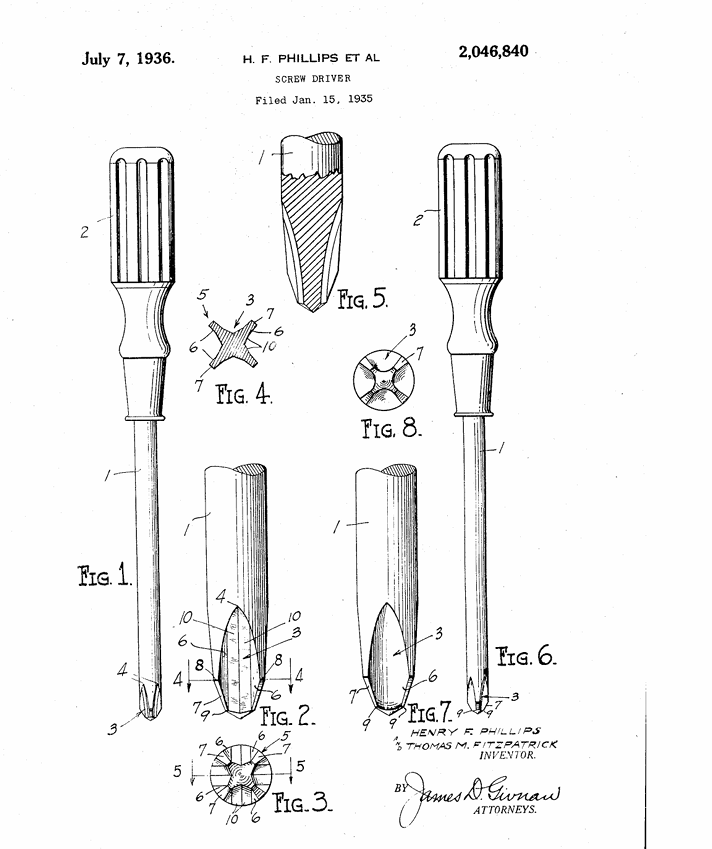
Phillips, in how we use it, is a generic term referencing any cross-tip screwdriver, just like how you'd use "Allen" for Hex tips or "Crescent" for adjustable wrenches. The name "Phillips" is in reference to a long-expired patent held by Henry F. Phillips back in 1936, who sought to industrialize the impractical and costly self-centering cross-head screwdrivers and screws of the time. To quote the patent directly:
Ok, pumping the brakes here.
The history is interesting, sure, but I noticed most blogs covering this topic added a lengthy history section, like I was about to do. Instead of me regurgitating that same history, check out the Oregon Encyclopedia article on it, where they do a much better job than I do. It’s better this way, I promise.
PHILLIPS® is the registered trademark of The Phillips Screw Company. It has appeared on a couple of the screwdrivers, for example, here is Snap-on's listing for the #00 Phillips screwdriver.
 The Phillips Screw Company has, as of the time of writing of this paper, 87 registered trademarks with the United States Patent and Trademark Office. One of those trademarks is US Registration Number 839856 PHILLIPS.
If The Phillips Screw Company has a trademark on the name, why is it that every screwdriver and their mother tosses around the “Phillips” name without licensing the trademark?
Ah, you see, that is a good question for people much more versed in trademark law.
To answer this question in a way I can understand, we need to talk about Descriptive Fair Use. This category of Trademark Fair Use allows a trademarked term, like Phillips, to be used in a descriptive manner rather than a brand identifier. Phillips, in this case, gained a secondary meaning to describe cross-headed screwdrivers and cross-recessed screws. In how I understand it, it allows the crosshead screws/drivers to be called Phillips as a descriptor since it isn’t directly referencing or drawing association with the Phillips Screw Company.
If you want to read more, there is an article out of the University of North Caroline School of Law that was helpful and fairly easy to digest.
The takeaway from these two sections is that “Phillips” is not a screwdriver type. Ok, I'm being a bit pedantic here, but saying “Phillips” implies one omnipotent “Phillips” standard and omits the idea that there are different standards which manufacturers use to create drivers and screw. Of the standards that I saw being mentioned, there were five that came up most often:
Other Resources:
JIS is also not referring to screwdrivers specifically, as Phillip’s patents did. JIS is a set of national standards for mineral and industrial products, data, and services in Japan. That covers everything from construction materials to logistics and textiles, totaling over 10,000 standards. Where the Phillips patents covered specifically crosshead screws and screwdrivers, JIS covers well, everything.
The history of JIS is much simpler. What was the neat thing that happened in the mid-1900s? Ah, yes, World War II. To adapt to the massive global industrial machine that War demanded, the allies coordinated and, post-war, created the International Organization for Standardization (ISO). Japan was, well, not so friendly at the time, and utilized their own standard, the “JES” national standard, which started back in 1921. What’s most important to know is that the most significant strides in Japanese standards occurred after the War, with the establishment of the Japanese Industrial Standards Committee (JISC), which ushered in the Japanese Industrial Standards we hear about today. with the
That is the gist. The rest is bureaucratic history.
If you want to read more, I recommend reading the Daitool blog on “What is JIS?” or a paper written in 2002 by the Director General of the Japanese Standards Association (Online PDF).
JIS did, at one time, utilize a “JIS Screw” that I've seen on motorcycle forums and in person. From my understanding, these dimples only appear on larger driver sizes, and since the focus of this paper is for more precision-sized screws and drivers, going into more detail about the dimple isn’t relevant, but interesting.
So, all crosshead screwdrivers are considered “Phillips”, in common language, but some “Phillips” are “JIS”. Confusing, good, because that’s where I'm at. Let’s now go over some of the arguments I see online.
Other Resources:
Since the point of the paper is not about these two drive systems, as they do not appear in Nintendo Consoles, I’ll leave some resources if you are curious and continue.
Others within the circles argue that, no, JIS is on par with other global standards, rendering this debate null. If you damage your screws, it’s because your screwdriver is damaged or poorly made, your fastener was damaged or poorly made, or you are using the wrong driver. Buy quality drivers from reputable brands, and don’t worry about it.
Other Resources:
Others argue that, no, this is not a “feature” as there is no evidence to back that claim up, going as far as calling the whole thing a myth.
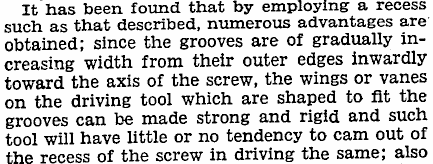
Reading Phillips' patents directly, the idea of camming out was exactly what Phillips sought to avoid. To quote US Patent 2,046,839 - Screw:
Vessel, a big brand of Japanese-made screwdrivers that I will spend a lot of time talking about later, featured information regarding this topic. On their English website, their Catalog (Online PDF) has an impact bit section (pg 40) with the section implying that damage and deformation of the wings cause cam out.

JDV, the North American distributor of Vessel tools, has, as of the writing of this paper, a PDF spotlighted: PREVENT DAMAGE TO JIS SCREWS (Online PDF), a Vintage Japanese Motorcycle Magazine from 2013. In that magazine, when going over the history of the cross-tipped screwdriver, it was the engineers in Cadillac factories of the 1940s who liked the cam-out feature.

The Japanese, as the magazine states, did not like this cam-out feature and sought their own design.

JDV also has a vessel product catalog titled NEW HAND TOOLS CATALOG (Online PDF). At the end of the document, they feature a “KNOW Better” text box about Cross Point Tips. It states, in no uncertain terms, that, and I quote:


Despite all these arguments, no primary information citing the automotive or aerospace industry of that era is provided to back up these claims. Even looking at primary documentation from the 1936 Cadillac Vehicle Information Kit (Online PDF) yielded no substantial information. Phillips is mentioned on page 105, but aside from mentioning it in a list of tools, it was not touted as some “anti-overtightening solution”.
If you want some more anecdotal evidence from motorcycle and bike enthusiasts on these arguments, here is a list of various YouTube videos you can watch:
Other Resources:
Why I think most brands omit tip standards, well, we first need to go over what white-label and private-label products mean. I haven’t heard of these terms before, but you’ll know them when I start talking about them.
You ever scroll on Amazon and think, “Gosh, this screwdriver set looks exactly like this one and this one.” That’s an example of white labeling in action. A company makes those screwdriver sets, and other companies slap their logos on it and sell it as their own brand without needing to manufacture it themselves.
Private labels, on the other hand, are a similar concept, but instead of selling multiple brands, they are exclusive to one retailer. The best examples of this are Costco’s Kirkland Signature brand or Trader Joe’s, which almost exclusively sells private-label products. Private labels are owned by the company that sells them.
The particulars for each strategy, and the advantages and disadvantages, aren’t very important to the paper. If you want to read more, the Indeed blog post that I linked several times in this section, and the other links within the blog post, are very good.
What I want to highlight is that several brands most likely use this strategy. There is no way I can prove, without a shadow of a doubt, that a brand is utilizing a private or white label; however, you can either infer it based on product geometry or the sheer lack of information about their product.
With that said, I'll go through each brand I have heard of and pay particular attention to brands that sell precision Phillips #00 screwdrivers or bits to keep it relevant to the DS and 3DS conversation.
Their website doesn’t disclose any standards and is very light on information. Their 153-in-1 kit apparently includes JIS and Phillips bits, but their website listing for the same product doesn’t bother listing the included bits.
Ok, I retract my statement about not wanting to throw shade; their website is not good.
This brand is almost certainly a white-label brand, as these offerings from OOKYMOTOR, DikTalk, ORIA, and EFAITHFIX are far too visually similar to be a coincidence.
Vessel has a Catalog (Online PDF) on their Japanese website (which has an English translation). It features a section called “Technical Data” on the second-to-last page. This is a PDF, so I cannot hyperlink directly to the page, but screw standards, which appear to be compatible with their Phillips, Pozidriv, and Supadriv drivers, are listed as:
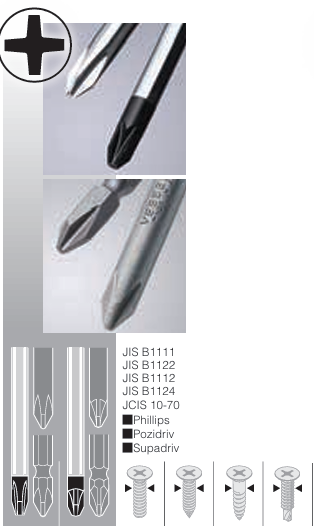

I will get more into these standards later.
Outside of the catalogs, Vessel discloses their ISO certifications, but from what I can gather, ISO 9001, which is seemingly relevant as it mentions Screwdrivers, is more for quality management systems, making sure that the products are consistent, and not so much about the screwdrivers themselves.


I will get to JIS B 1012 - Cross Recesses for Screws in the next section, but I take the mention of this JIS standard to be a point of pride for the company, and not an admission to what standard is used.
Further down in the document, they mention that screwdrivers and bits are manufactured in accordance with JIS, but also, in the very next statement, they developed and utilized their own, in-house standard.
Other than these mentions, no specific standard was mentioned for their crosshead screwdrivers, but a standard could be inferred based on the compatible screw standards that were mentioned as they should tie back to the drivers they were intended for.
There should be a healthy dose of skepticism dropped here, as a PDF document from an unverified source can be tampered with, but the information in the document appears to be sound.
In the document, Vessel stated they follow their own internal standard, which is based on the JIS standard and has “a great engagement to ASME, ISO, and JIS standards for cross recessed screws.”


Another standard that ran alongside JIS in Japan was the Japan Camera Industrial Standard (JCIS). This was formed by the Japan Camera Industry Associates (JCIA), which is a conglomerate of several major camera manufacturers (Nikon, Canon, Sony, etc). This standard introduced a new standard of PH0, which differed from other major standards. According to Vessel, JCIS 8-70 (Online PDF) was discontinued in June 2020, with the PDF document stamped with “Abolished/Discontinued on June 9, 2020”.

This is important to note as Vessel’s PH0 complies with the JCIS tip profile but is modified to their own tip profile. Sizes smaller, PH00, 000, and 0000 are original profiles made by studying screws found on the market, and are not an internationally or locally recognized standard.
What I found interesting is that Vessel follows an in-house standard but bases their cross headed screwdrivers on both JIS and JCIS. It could be only their smaller drivers to conform to the JCIS and larger drivers to JIS. Without having an intimate knowledge of the standards, that is my best theory.
Another blog mentions that Vessel follows the DIN 5260 standard, which is identical to the newer ISO 8764-1 standard. No sources were provided to back up such claims.
Their precision driver bit set mentions their Phillips bits are “JIS and JISC compatible”, but what standard was used to make such compatibility possible is not specified.
Looking at their screwdrivers, however, their Phillips heads are listed to follow ISO-8764-1 ( Online PDF). I should note that the smallest full screwdriver Tekton sells is Phillips #0, which is what the standard was listed with. It was not listed with the precision driver bit set.
In their bit sets, I will choose their Mako set as the example, as they have both JIS and Phillips included as two separate bit types. Digging into their “Bit Information” section, they include interesting information about both Phillips and JIS.
Their Phillips bits are built in accordance with the ISO-8764-1 standard, and sizes #0, #00, and #000 are interchangeable, with only the outer diameter changing.
Their JIS bits follow JIS B 4633 with a noted difference between Phillips occurring at sizes #0 and smaller. The “internal radius of the cruciform is the most notable difference”.

What I found most perplexing, and this is a bit of a tangent since I already answered the question of what standards were disclosed, if IFixit adamantly believed that the differences between JIS and Phillips were as significant as they suggest, why is it that they only sell full Phillips Screwdrivers with the highlighted text box saying “Our Phillips drivers are manufactured to be cross compatible with JIS screws”?

The NH Hardware Wiki claims that iFixit's Phillips bits are more in line with the JIS standard, making them less compatible with the rail screws on the Nintendo Switch. Other than a video example of the IFixit Phillips head underperforming against an unnamed Phillips bit, there is no objective information provided to support the claim.
This Wiki also picks on iFixit for having grossly incorrect information on their guides and has made attempts to change the guides to reflect the right drivers, but were declined. I also picked on iFixit at the beginning, mostly for fun, but to be real here, negligence leads to real and unnecessary damage to both screws as well as consoles. So, take this little tangent
In the Pentax forum post I highlighted at the top of the document, the original poster, photogem, said the iFixit JIS bits are not JCIS, but ISO. iFixit never claimed that they conformed to the JCIS standard, and no sources were provided.
The blog mentions that this is the only brand that follows JIS B 4633. The source that the blog provided was dead, and going through the Wayback Machine, I couldn’t confirm the information claimed.
Between their Japanese and English (Online PDF) catalog and their website, I couldn’t find any mention of standards for crosshead screwdrivers.

In a datasheet for their various products listed (PDF Download), it lists PH 00 and PH 000 as “Optimized for Asian PH screws”, whatever that is supposed to mean.

I could find no other mention of standards.
In the Pentax forum post I highlighted at the top of the document, the original poster, photogem, said Wera’s PH00 and PH000 are not JIS, but ISO. No sources were provided to back the claim.

I emailed Wiha to get some more information, and they replied, “All Wiha Tools, including our Philips screwdrivers, follow the DIN (Deutsches Institut für Normung) standard. We do not currently manufacture any JIS or JCIS profile screwdrivers.”

At this time, I do not know if DIN has a standard for precision bits, but again, it could scale down from PH #0.
Since The Phillips Screw Company is not a brand that sells drivers, and I already mentioned them, I will include the information on them here for the sake of organization.
The Phillips Screw Company, from what I can tell, doesn’t disclosure their standard, but I take that to mean it is an in-house standard. The “PHILLIPS®” label on Snap-on's website, which was labeled with a “PH”, does not match any bits on their website; however, it seems to either be referencing screws these bits are compatible with, and not the driver bits themselves, or, less likely, Phillips ACR® Drive System, which features both trademarks (Online PDF). From Snap-on's product page of their #00 drive, I don’t have reason to believe it is the ACR Drive System, but I also cannot view a close-up of the bit.
They sell precision screwdrivers and bits under the Draper and Draper Expert brands, but what I find odd is how inconsistent the naming scheme for their cross-head drivers is.
They sell a precision driver set under the Draper Expert Brand, as well as a precision driver set under the Draper name. For their cross-headed screwdrivers, they call them “cross slot screwdrivers”.
Their 14-in-1 driver set under the Draper Expert brand and the 52-bit and screwdriver set, sold under the Draper name, list the tip type as “Phillips” instead of cross slots. The 32 Piece Precision Set is sold under the Draper brand, which uses the common Phillips shorthand “PH” for their sizing.
I couldn’t find a reason for the discrepancy, even within the same brand. I can understand using the shorthand “PH” on large multibit sets, but the difference between cross slot and Phillips in documentation implies the two terms can be used interchangeably.
Their Draper brand is targeting “everyday tasks”, while their Draper Expert is “High-quality”.
Other than quality assurance standards, there is no mention of driver tip standards that I could find.

Instead, Pro Wittron appears to be a brand of Witte, another German company. I don’t know why those two are associated together, but either way, I couldn’t find any information on tip geometry. On their MAXX line of drivers, they mention how their handle geometry helps avoid cam out, but that’s about all I could find.
An interesting bit of information is that Witte serves as an OEM manufacturer for private labels.
The biggest problems I face: Access.
Industrial Standards are not publicly accessible for free. These industrial standard committees that oversee these standards need money to operate, and to view these standards, you need to pay for access.
To view the ISO 8764-1:2004, I would have to pay $170.56 USD.
JIS B 4633:1998 costs ~$75 to access.
ASME? DIN? Do you even need to ask?
With official sources being, from my perspective, prohibitively expensive to the outside observers, the only real option available is… the sketchy resources the internet has to offer.
Scribd appears to have documents like ISO 8764-1:2004, and Kikakurui has scans of JIS B 4633: 1998 (Online PDF) and JIS B 1012-1985 (Online PDF). I do not know if these documents have been modified or even contain all of the information that would be in the purchased documents. Judging by the page numbers listed, they do not.
The domain of screws and drivers that small, to the best of my understanding, fall under the jurisdiction of the Camera & Imaging Products Association (CIPA), which is the current manager of the Japan Camera Industry Association (JCIA) standards after it was withdrawn in 2020.
Their relevant standards, CIPA AD 001, 002, and 003, are available for viewing without any hurdles.
I then have to turn to other sources of information like the wholesale storefronts Fasteners.eu and RCFasteners, who have Technical Specs and data available on their websites... for screws, or the random, uncited images and tables bloggers have provided (not to fault the bloggers, I doubt they are shelling out for the technical specifications documents).

You have one camp, the Japanese automotive and bicycle group, talking about drivers #0 and larger, and then you have Japanese camera and console enthusiasts talking about drivers #0 and smaller.
The conventional standards for cross tips, your JIS, ISO, DIN, etc, bottom out their standard at #0 with no guidance on #00, #000, or #0000 tip geometry. This seems to be the exclusive domain of JCIS, which offers tip geometry for those sizes.
Unless I am grossly misunderstanding how these smaller-sized drivers can be extrapolated from the conventional standards, treating a #2 Phillips and a #000 Phillips as mostly similar aside from scale would be incorrect.
“...most Nintendo handhelds made before 2015 (Game Boy, DS, 2DS, o3DS) use JIS screws, while those made after 2015 (n3DS, Switch) typically use Phillips (PH/ISO 8764) screws.”
== Project Ends here ==
Links to integrate:
Hi. I am the weirdo who purchased every DS and 3DS console solely to measure their screws for reasons that aren’t important to this post.
Before I get into said post, I want to highlight some sources that were immensely valuable to this project. These sources served as the backbone on which I could build off of, and I couldn’t have done it without them. They are worth reading.
- Tekton Blog: JIS vs Phillips: Understanding Tip Geometry, Myths, and Fastener Compatibility
- Pentax Forums: A little bit of history: JCIS, JIS + PH screws and screwdrivers + about VESSEL by photogem
ABSTRACT
The focus of this paper is to find out what “Phillips” and “JIS” screwdrivers mean for repairing the DS and 3DS family consoles. It was, however, abundantly clear that this is not a simple question to answer.For starters, there is no such thing as a “Phillips” or “JIS” screwdriver, as odd as that sounds. Crosshead screwdrivers are commonly known as Phillips, but those drivers can be made with different manufacturer standards; JIS is one such standard. The answer is not “Dumping your Phillips and buying a JIS”; rather, following the good advice of “Getting what you pay for”, purchase quality tools from reputable manufacturers, and you are less likely to damage screws.
Though it pains me dearly, I couldn’t reach a satisfying answer since the deeper I went, the more complicated and unwieldy the topic got. In the end, my lack of engineering knowledge and means of passing paywalls left this paper in the uncompleted state that it is in.
DISCLAIMER
I need to slap a few healthy disclaimers here at the beginning:
- I do not sell screwdrivers of any kind. Yes, I believe disclosing this is important.
- I am not partial or loyal to any brand of screwdrivers. I own a cheap precision screwdriver kit from Amazon that I have used for years, a Vessel P00 driver that might be fake, and several screwdrivers and screwdriver bit sets purchased specifically for this project.
- I am not an expert on Patents. Reading them hurts my brain.
- I am not an expert on trademarks, copyrights, or the legal framework they operate in.
- I am not an engineer. I do not understand how to translate tables of measurements into real-world performance.
- I am a DSi enthusiast who wanted to answer a question I had.
PDFs appear very frequently, and I will be labeling them in two, hopefully obvious ways:
- Online PDF - PDFs hosted by the website. I will link to the hosted PDF.
- PDF Download – PDFs you need to download to view. For posterity, I will link to the download link, so be warned that a download will start if you click on it.
1.0 - INTRODUCTION
One of the things I’ve come across while measuring screws for the DS and 3DS consoles is the idea of “using JIS screwdrivers for Japanese tech”. I know I’ve seen the term JIS pop up in the DS world a couple of times since, and have parroted this rhetoric without knowing exactly what it meant. What was odd was my Phillips screwdriver bits, which I use for disassembling and repairing DSi and DSi XL consoles, haven’t damaged screws in the way these debates would suggest.Sources argue that either:
- Using non-JIS compliant drivers on Japanese products increases the risk of cam-outs and damage to the screw. (Online PDF)
- The JIS standard is the least restrictive standard for cross-tip drivers. Other standards fit within the tolerable range of JIS, meaning that all well-made cross-head drivers will fit JIS standard screws.
Independent bloggers, YouTubers, and everyone seem to have an opinion on whether a JIS screwdriver matters when working on Japanese products.
Even IFixIt, who speak about the differences of JIS and Phillips, and even sells JIS and Phillips Driver bits, can’t decide whether the lower shell screws of the New 3DS XL and New 3DS use the same screw heads!
Here is an image of those two exact screws from a New 3DS XL and a New 3DS. Can you tell me which one is the JIS #00 of the New 3DS XL and which one is the Phillips #00 of the New 3DS?
I cannot.
Or how in the DSi Dual Camera Assembly guide, the driver used swaps from Phillips to JIS for seemingly no reason halfway through, which are somehow different from the same screws used in the DSi XL.
Or the complete and utter madness in the 3ds Lower Case Screw comment section, where PH #00 works fine for some and destroys the screws for others.
Or how in the New 2DS XL guide, J00 and Phillips #00 are interchangeable.
Or how the Lower Outer Casing screws of the New 3DS XL are a PH #00 in one guide, but a JIS #0 in another.
Sure, I’m picking on iFixit since I am familiar with the DS and 3DS family screws, but it serves as a good illustration of what I see online surrounding this debate.
So, what’s going on?
Why is there no consensus?
Shouldn’t this be an engineering question with an objective answer?
Is it all just marketing B.S. masking the “JIS vs Phillips” debate with “Don’t buy THEIR PHILLIPS screwdrivers, buy OUR PREMIUM JIS screwdrivers”?
What exactly do “Phillips” and “JIS” mean anyway?
Trust me when I say it is complicated.
To start tackling this question, we need to start by defining the terms.
2.0 - Phillips and JIS
2.1 - What is “Phillips”?
Phillips, in how we use it, is a generic term referencing any cross-tip screwdriver, just like how you'd use "Allen" for Hex tips or "Crescent" for adjustable wrenches. The name "Phillips" is in reference to a long-expired patent held by Henry F. Phillips back in 1936, who sought to industrialize the impractical and costly self-centering cross-head screwdrivers and screws of the time. To quote the patent directly:
“Ordinary screws are cut, rolled or stamped by automatic machinery and cost but a few cents per hundred to produce. It is, therefore, one of the principal objects of the present invention to provide a tool which may be used with automatic machinery to punch recesses in the heads of Screws in such a way that all of the desirable virtues of the screw head and the recesses therein are retained...
Thus we provide a tool of maximum strength and at the same time one which when used as a punch, forms a punched recess in a most efficient manner, by permitting the proper flow and distribution of the metal without causing any of the disadvantages as above pointed out in reference to other types of punches, broaches and the like.”
Ok, pumping the brakes here.
The history is interesting, sure, but I noticed most blogs covering this topic added a lengthy history section, like I was about to do. Instead of me regurgitating that same history, check out the Oregon Encyclopedia article on it, where they do a much better job than I do. It’s better this way, I promise.
2.2 - PHILLIPS®
Taking a quick aside here to talk about the “PHILLIPS®” that I have seen on a couple of screwdrivers.PHILLIPS® is the registered trademark of The Phillips Screw Company. It has appeared on a couple of the screwdrivers, for example, here is Snap-on's listing for the #00 Phillips screwdriver.
If The Phillips Screw Company has a trademark on the name, why is it that every screwdriver and their mother tosses around the “Phillips” name without licensing the trademark?
Ah, you see, that is a good question for people much more versed in trademark law.
To answer this question in a way I can understand, we need to talk about Descriptive Fair Use. This category of Trademark Fair Use allows a trademarked term, like Phillips, to be used in a descriptive manner rather than a brand identifier. Phillips, in this case, gained a secondary meaning to describe cross-headed screwdrivers and cross-recessed screws. In how I understand it, it allows the crosshead screws/drivers to be called Phillips as a descriptor since it isn’t directly referencing or drawing association with the Phillips Screw Company.
If you want to read more, there is an article out of the University of North Caroline School of Law that was helpful and fairly easy to digest.
The takeaway from these two sections is that “Phillips” is not a screwdriver type. Ok, I'm being a bit pedantic here, but saying “Phillips” implies one omnipotent “Phillips” standard and omits the idea that there are different standards which manufacturers use to create drivers and screw. Of the standards that I saw being mentioned, there were five that came up most often:
- International Organization for Standardization (ISO)
- American Society of Mechanical Engineers (ASME)
- Deutsches Institut für Normung (DIN)
- Japan Camera Industrial Standard (JCIS)
- And yes, Japanese Industrial Standard (JIS)
Other Resources:
- Henry F. Phillips - Wikipedia
- NIHF Inductee Henry Phillips Invented the Phillips Screw
- List of screw drives - Wikipedia
- 90 years ago, a Portland inventor patented the Phillips screw | kgw.com
2.3 - What is “JIS”?
This takes us to the Japanese Industrial Standard (JIS), which, semantics again, is not a screwdriver type. It is a standard by which screws and drivers are manufactured.JIS is also not referring to screwdrivers specifically, as Phillip’s patents did. JIS is a set of national standards for mineral and industrial products, data, and services in Japan. That covers everything from construction materials to logistics and textiles, totaling over 10,000 standards. Where the Phillips patents covered specifically crosshead screws and screwdrivers, JIS covers well, everything.
The history of JIS is much simpler. What was the neat thing that happened in the mid-1900s? Ah, yes, World War II. To adapt to the massive global industrial machine that War demanded, the allies coordinated and, post-war, created the International Organization for Standardization (ISO). Japan was, well, not so friendly at the time, and utilized their own standard, the “JES” national standard, which started back in 1921. What’s most important to know is that the most significant strides in Japanese standards occurred after the War, with the establishment of the Japanese Industrial Standards Committee (JISC), which ushered in the Japanese Industrial Standards we hear about today. with the
That is the gist. The rest is bureaucratic history.
If you want to read more, I recommend reading the Daitool blog on “What is JIS?” or a paper written in 2002 by the Director General of the Japanese Standards Association (Online PDF).
JIS did, at one time, utilize a “JIS Screw” that I've seen on motorcycle forums and in person. From my understanding, these dimples only appear on larger driver sizes, and since the focus of this paper is for more precision-sized screws and drivers, going into more detail about the dimple isn’t relevant, but interesting.
So, all crosshead screwdrivers are considered “Phillips”, in common language, but some “Phillips” are “JIS”. Confusing, good, because that’s where I'm at. Let’s now go over some of the arguments I see online.
Other Resources:
- JIS Specifications | Research Navi | National Diet Library
- Japanese Industrial Standards - Wikipedia
- ISO - JISC - Japanese Industrial Standards Committee
2.4 - Posidrive and Supadriv.
It is worth at least mentioning Posidrive and Supadriv. These are two drive systems that are, at a baseline, a cross-recess system like Phillips, but have stark differences in how they appear and operate. This is unlike JIS and Phillips, which, on appearance, are nearly indistinguishable.Since the point of the paper is not about these two drive systems, as they do not appear in Nintendo Consoles, I’ll leave some resources if you are curious and continue.
4.0 - Arguments for Phillips vs JIS
4.1 - Using Phillips drivers on your Japanese equipment will damage the screws.
The whole “JIS vs Phillips” debate seems to stem largely from the Classic Japanese Motorcycle and auto hobbyist circles. Numerous forums and blogs dedicated to the hobby have anecdotal and video evidence of “Phillips” drivers failing on their screws, and advocate for purchasing specific tool brands. One blog even went further to say that ANY driver following a standard that isn’t JIS is a “middle ground compromise” that will always perform worse than authentic JIS drivers.Others within the circles argue that, no, JIS is on par with other global standards, rendering this debate null. If you damage your screws, it’s because your screwdriver is damaged or poorly made, your fastener was damaged or poorly made, or you are using the wrong driver. Buy quality drivers from reputable brands, and don’t worry about it.
Other Resources:
4.2 - Phillip's screwdrivers cam out under torque as a feature.
And then you get Phillips' notorious propensity to cam out after a specific torque is reached. Anecdotal evidence and damaged screws on motorcycles say that it is a feature of Phillips and was intentional to prevent damage to aluminum aircraft.Others argue that, no, this is not a “feature” as there is no evidence to back that claim up, going as far as calling the whole thing a myth.
Reading Phillips' patents directly, the idea of camming out was exactly what Phillips sought to avoid. To quote US Patent 2,046,839 - Screw:
“It has been found that by employing a recess such as that described, numerous advantages are obtained; since the grooves are of gradually increasing width from their outer edges inwardly toward the axis of the Screw, the wings or vanes on the driving tool which are shaped to fit the grooves can be made strong and rigid and Such tool will have little or no tendency to cam out of the recess of the screw in driving…”
Vessel, a big brand of Japanese-made screwdrivers that I will spend a lot of time talking about later, featured information regarding this topic. On their English website, their Catalog (Online PDF) has an impact bit section (pg 40) with the section implying that damage and deformation of the wings cause cam out.
“Tip breakage occurs at the wings where they contact screws. The more screws are tightened, the wings become loaded, get deformed, start cam-ing out and the wings can become broken at the end.”
JDV, the North American distributor of Vessel tools, has, as of the writing of this paper, a PDF spotlighted: PREVENT DAMAGE TO JIS SCREWS (Online PDF), a Vintage Japanese Motorcycle Magazine from 2013. In that magazine, when going over the history of the cross-tipped screwdriver, it was the engineers in Cadillac factories of the 1940s who liked the cam-out feature.
“One of the attributes that Cadillac engineers liked about the design is that the driver would ‘cam-out’ after a certain torque was reached and not allow over-tightening of the screw.”
The Japanese, as the magazine states, did not like this cam-out feature and sought their own design.
“Japanese engineers developed their own cross-point design, but did not view this “cam-out” feature as an advantage… torque and over-tightening would be addressed at the operator or tool level – not at the screw tip.”
This magazine that JDV links to is a truncated version of the full magazine published by the Vintage Japanese Motorcycle Club. I was unable to find a scan of the magazine without either sourcing the original magazine or getting a paid membership with the Vintage Japanese Motorcycle Club. Therefore, I cannot independently view the article to verify the information.JDV also has a vessel product catalog titled NEW HAND TOOLS CATALOG (Online PDF). At the end of the document, they feature a “KNOW Better” text box about Cross Point Tips. It states, in no uncertain terms, that, and I quote:
“The Phillips design was a great solution for the automobile production lines since it was designed to “cam out” after a certain torque was reached to prevent over-tightening of the screws.”
At the end of Chapter Four of the 2013 book One good turn : a natural history of the screwdriver and the screw by Witold Rybczynski, the author surmises that though it wasn’t in the original patent. Cam out at a certain torque was implemented into the design because of the benefits on the assembly line.“Although Phillips designed his screw to have “firm engagement” with the screwdriver, in fact a cruciform recess is a less perfect fit than a square socket. Paradoxically, this very quality is what attracted automobile manufacturers to the Phillips screw. The point of an automated driver turning the screw with increasing force popped out of the recess when the screw was fully set, preventing overscrewing. Thus, a certain degree of cam-out was incorporated into the design from the beginning.”
Despite all these arguments, no primary information citing the automotive or aerospace industry of that era is provided to back up these claims. Even looking at primary documentation from the 1936 Cadillac Vehicle Information Kit (Online PDF) yielded no substantial information. Phillips is mentioned on page 105, but aside from mentioning it in a list of tools, it was not touted as some “anti-overtightening solution”.
If you want some more anecdotal evidence from motorcycle and bike enthusiasts on these arguments, here is a list of various YouTube videos you can watch:
- Do you really NEED a JIS Screwdriver??
- JIS Screws (MUST WATCH)
- Why you need a JIS Screwdriver!
- JIS vs Phillips: Discussion + JIS Tool Haul
- Japanese VESSEL tool brand line of bits. For JDM tool collectors, JIS screws, and the fun of it.
- #6 Phillips, Pozi, or JIS
Other Resources:
5.0 - The Market for Drivers.
5.1 - Then the answer should just be to “buy JIS-compliant crosshead screw drivers and move on with your life”, right?
Well…. about that. What standard a company uses is rarely disclosed. I mean, why would they need to?Why I think most brands omit tip standards, well, we first need to go over what white-label and private-label products mean. I haven’t heard of these terms before, but you’ll know them when I start talking about them.
You ever scroll on Amazon and think, “Gosh, this screwdriver set looks exactly like this one and this one.” That’s an example of white labeling in action. A company makes those screwdriver sets, and other companies slap their logos on it and sell it as their own brand without needing to manufacture it themselves.
Private labels, on the other hand, are a similar concept, but instead of selling multiple brands, they are exclusive to one retailer. The best examples of this are Costco’s Kirkland Signature brand or Trader Joe’s, which almost exclusively sells private-label products. Private labels are owned by the company that sells them.
The particulars for each strategy, and the advantages and disadvantages, aren’t very important to the paper. If you want to read more, the Indeed blog post that I linked several times in this section, and the other links within the blog post, are very good.
What I want to highlight is that several brands most likely use this strategy. There is no way I can prove, without a shadow of a doubt, that a brand is utilizing a private or white label; however, you can either infer it based on product geometry or the sheer lack of information about their product.
With that said, I'll go through each brand I have heard of and pay particular attention to brands that sell precision Phillips #00 screwdrivers or bits to keep it relevant to the DS and 3DS conversation.
5.2 - STREBITO
This is the cheap precision kit I mentioned at the top that I have had for years and served me well. I don’t exactly mean to throw shade at the product by calling it “cheap” since it has been a good set for me all this time.Their website doesn’t disclose any standards and is very light on information. Their 153-in-1 kit apparently includes JIS and Phillips bits, but their website listing for the same product doesn’t bother listing the included bits.
Ok, I retract my statement about not wanting to throw shade; their website is not good.
This brand is almost certainly a white-label brand, as these offerings from OOKYMOTOR, DikTalk, ORIA, and EFAITHFIX are far too visually similar to be a coincidence.
5.3 - Vessel
Vessel, a brand I heard of numerous times in my research as “THEE JIS Screwdriver to buy”. I often cannot find an argument about “JIS” and “Phillips” without having a Vessel driver shown in some capacity. I could probably devote an entire post just to Vessel as there is a lot of information to chew through, so I'll do my best to keep it concise and organized.Vessel has a Catalog (Online PDF) on their Japanese website (which has an English translation). It features a section called “Technical Data” on the second-to-last page. This is a PDF, so I cannot hyperlink directly to the page, but screw standards, which appear to be compatible with their Phillips, Pozidriv, and Supadriv drivers, are listed as:
- JIS B1111 – Machine screws with cross holes
- JIS B1122 – Self-tapping screws with cross holes
- JIS B1112 – Cross-holed wood screw
- JIS B1124 – Drill screws with self-tapping threads
- JCIS 10-70 – cross recess pan head screw (Online PDF)
I will get more into these standards later.
Outside of the catalogs, Vessel discloses their ISO certifications, but from what I can gather, ISO 9001, which is seemingly relevant as it mentions Screwdrivers, is more for quality management systems, making sure that the products are consistent, and not so much about the screwdrivers themselves.
On the USA version of the Vessel website, they have this large and stylized banner titled “JISDrive+”. The top of the document features what appears to be a historical retrospective:“In 1950, Osawa Shokai Co., Ltd. was the first company in Japan to obtain a license for Phillips screws, and VESSEL was commissioned to produce their Phillips screwdrivers. VESSEL was involved in the establishment of the JIS as a representative of tool manufacturers, and this tip was called JIS B-1012. These JIS screwdrivers are now used in audio players, automobiles, motorcycles, and other industrial products in Japan and around the world.”
I will get to JIS B 1012 - Cross Recesses for Screws in the next section, but I take the mention of this JIS standard to be a point of pride for the company, and not an admission to what standard is used.
Further down in the document, they mention that screwdrivers and bits are manufactured in accordance with JIS, but also, in the very next statement, they developed and utilized their own, in-house standard.
Other than these mentions, no specific standard was mentioned for their crosshead screwdrivers, but a standard could be inferred based on the compatible screw standards that were mentioned as they should tie back to the drivers they were intended for.
The Pentax Forum post I highlighted at the top of the document included a document photogem (the original poster) received from Vessel when they inquired about their standards (PDF Download).There should be a healthy dose of skepticism dropped here, as a PDF document from an unverified source can be tampered with, but the information in the document appears to be sound.
In the document, Vessel stated they follow their own internal standard, which is based on the JIS standard and has “a great engagement to ASME, ISO, and JIS standards for cross recessed screws.”
At the end of the document, they stated plainly that there are no official standards for sizes PH #00, #000, and #0000 other than an unspecified British Standard (BS). The BS standard (hehe) defined those differences only in shank diameter, but has the same tip profile.Another standard that ran alongside JIS in Japan was the Japan Camera Industrial Standard (JCIS). This was formed by the Japan Camera Industry Associates (JCIA), which is a conglomerate of several major camera manufacturers (Nikon, Canon, Sony, etc). This standard introduced a new standard of PH0, which differed from other major standards. According to Vessel, JCIS 8-70 (Online PDF) was discontinued in June 2020, with the PDF document stamped with “Abolished/Discontinued on June 9, 2020”.
This is important to note as Vessel’s PH0 complies with the JCIS tip profile but is modified to their own tip profile. Sizes smaller, PH00, 000, and 0000 are original profiles made by studying screws found on the market, and are not an internationally or locally recognized standard.
What I found interesting is that Vessel follows an in-house standard but bases their cross headed screwdrivers on both JIS and JCIS. It could be only their smaller drivers to conform to the JCIS and larger drivers to JIS. Without having an intimate knowledge of the standards, that is my best theory.
Another blog mentions that Vessel follows the DIN 5260 standard, which is identical to the newer ISO 8764-1 standard. No sources were provided to back up such claims.
5.4 - Tekton
Tekton was a company I indirectly highlighted at the top of the document that had a very good blog post on the JIS and Phillips discussion. Through my research, I do not recall seeing any blog or forum post mentioning Tekton drivers, but I still think they are worth mentioning.Their precision driver bit set mentions their Phillips bits are “JIS and JISC compatible”, but what standard was used to make such compatibility possible is not specified.
Looking at their screwdrivers, however, their Phillips heads are listed to follow ISO-8764-1 ( Online PDF). I should note that the smallest full screwdriver Tekton sells is Phillips #0, which is what the standard was listed with. It was not listed with the precision driver bit set.
5.5 - IFixIt
IFixit is a familiar name around here, is a bit of a unique case.In their bit sets, I will choose their Mako set as the example, as they have both JIS and Phillips included as two separate bit types. Digging into their “Bit Information” section, they include interesting information about both Phillips and JIS.
Their Phillips bits are built in accordance with the ISO-8764-1 standard, and sizes #0, #00, and #000 are interchangeable, with only the outer diameter changing.
Their JIS bits follow JIS B 4633 with a noted difference between Phillips occurring at sizes #0 and smaller. The “internal radius of the cruciform is the most notable difference”.
What I found most perplexing, and this is a bit of a tangent since I already answered the question of what standards were disclosed, if IFixit adamantly believed that the differences between JIS and Phillips were as significant as they suggest, why is it that they only sell full Phillips Screwdrivers with the highlighted text box saying “Our Phillips drivers are manufactured to be cross compatible with JIS screws”?
The NH Hardware Wiki claims that iFixit's Phillips bits are more in line with the JIS standard, making them less compatible with the rail screws on the Nintendo Switch. Other than a video example of the IFixit Phillips head underperforming against an unnamed Phillips bit, there is no objective information provided to support the claim.
This Wiki also picks on iFixit for having grossly incorrect information on their guides and has made attempts to change the guides to reflect the right drivers, but were declined. I also picked on iFixit at the beginning, mostly for fun, but to be real here, negligence leads to real and unnecessary damage to both screws as well as consoles. So, take this little tangent
In the Pentax forum post I highlighted at the top of the document, the original poster, photogem, said the iFixit JIS bits are not JCIS, but ISO. iFixit never claimed that they conformed to the JCIS standard, and no sources were provided.
5.6 - Sunflag
Sunflag was a brand mentioned on a blog discussing where to buy JIS screwdrivers. Otherwise, I don’t recall seeing them mentioned anywhere else.The blog mentions that this is the only brand that follows JIS B 4633. The source that the blog provided was dead, and going through the Wayback Machine, I couldn’t confirm the information claimed.
Between their Japanese and English (Online PDF) catalog and their website, I couldn’t find any mention of standards for crosshead screwdrivers.
5.7 - Wera
On Wera's listings for the Kraftform Micro line of screwdrivers, their Phillips #0 is “modified” in accordance with JCIS 0 (Japanese Camera Industrial Standard.In a datasheet for their various products listed (PDF Download), it lists PH 00 and PH 000 as “Optimized for Asian PH screws”, whatever that is supposed to mean.
I could find no other mention of standards.
In the Pentax forum post I highlighted at the top of the document, the original poster, photogem, said Wera’s PH00 and PH000 are not JIS, but ISO. No sources were provided to back the claim.
5.8 - Wiha
For Wiha, all I can really find is their precision Phillips drivers “reduce cam-out", but that was about it.
They do have ISO compliance disclosures on their website, good on them, but the cited ISO standards are for more general practices of their businessI emailed Wiha to get some more information, and they replied, “All Wiha Tools, including our Philips screwdrivers, follow the DIN (Deutsches Institut für Normung) standard. We do not currently manufacture any JIS or JCIS profile screwdrivers.”
At this time, I do not know if DIN has a standard for precision bits, but again, it could scale down from PH #0.
5.9 - Snap-on and The Phillips Screw Company
Snap-on is a weird exception. They do not seem to follow an internationally or nationally recognized standard, nor any custom in-house standards. When looking at their #00 driver, they appear to license the Phillips name from The Phillips Screw Company. That is, if “PHILLIPS®” is to be interpreted as a registered trademark. I could not find any more information on their website.Since The Phillips Screw Company is not a brand that sells drivers, and I already mentioned them, I will include the information on them here for the sake of organization.
The Phillips Screw Company, from what I can tell, doesn’t disclosure their standard, but I take that to mean it is an in-house standard. The “PHILLIPS®” label on Snap-on's website, which was labeled with a “PH”, does not match any bits on their website; however, it seems to either be referencing screws these bits are compatible with, and not the driver bits themselves, or, less likely, Phillips ACR® Drive System, which features both trademarks (Online PDF). From Snap-on's product page of their #00 drive, I don’t have reason to believe it is the ACR Drive System, but I also cannot view a close-up of the bit.
5.10 - Draper
Draper is a wholesaler out of the United Kingdom.They sell precision screwdrivers and bits under the Draper and Draper Expert brands, but what I find odd is how inconsistent the naming scheme for their cross-head drivers is.
They sell a precision driver set under the Draper Expert Brand, as well as a precision driver set under the Draper name. For their cross-headed screwdrivers, they call them “cross slot screwdrivers”.
Their 14-in-1 driver set under the Draper Expert brand and the 52-bit and screwdriver set, sold under the Draper name, list the tip type as “Phillips” instead of cross slots. The 32 Piece Precision Set is sold under the Draper brand, which uses the common Phillips shorthand “PH” for their sizing.
I couldn’t find a reason for the discrepancy, even within the same brand. I can understand using the shorthand “PH” on large multibit sets, but the difference between cross slot and Phillips in documentation implies the two terms can be used interchangeably.
Their Draper brand is targeting “everyday tasks”, while their Draper Expert is “High-quality”.
Other than quality assurance standards, there is no mention of driver tip standards that I could find.
5.11 - KNIPEX and/or Witte
KNIPEX is a weird one. A couple of sites say KNIPEX sells precision screwdrivers under the Wittron name, but I couldn’t confirm that on KNIPEX’s website. The KNIPEX website doesn’t have precision screwdrivers nor any mention of this “Wittron” branding.Instead, Pro Wittron appears to be a brand of Witte, another German company. I don’t know why those two are associated together, but either way, I couldn’t find any information on tip geometry. On their MAXX line of drivers, they mention how their handle geometry helps avoid cam out, but that’s about all I could find.
An interesting bit of information is that Witte serves as an OEM manufacturer for private labels.
5.12 - Other Brands
In this section, I’ll list all of the major brands together since all of the information I can find is largely the same. Meaning they sell Precision drivers, but offer no additional information.- Milwaukee sells precision screwdrivers. The only thing I can find are gross measurements, like the overall length of the driver. No information on tip geometry.
- Craftsman sells precision screwdrivers. No additional information I could find on their cross-head drivers.
- Ace Hardware sells branded precision screwdrivers. No additional information.
- Klein Tools sells precision screwdrivers. Some of their standard screwdrivers are listed to “Meet or exceed ASME and ISO” standards, whatever that means.
- PB Swiss sells precision screwdrivers. No additional information.
- HART sells precision screwdriver sets. My understanding is that HART is a Walmart house brand, which is more than likely a private label.
- Husky, the Home Depot house brand, sells precision screwdrivers. Weirdly enough, there is no official Husky website, so it is most certainly a private label. Their chatbot does confirm this, but there is no information about the OEM.
- Hakko sells precision screwdrivers under the CHP Brand. There is no additional information.
6.0 - Industrial Standards
6.1 - What do industrial standards say about these arguments? Is there truly a significant difference between the Japanese standard and other standards?
To say it gets more complicated from here is a gross understatement. I will do what I can, but there are several significant hurdles standing in my way, other than my ignorance of the topic and industry.The biggest problems I face: Access.
Industrial Standards are not publicly accessible for free. These industrial standard committees that oversee these standards need money to operate, and to view these standards, you need to pay for access.
To view the ISO 8764-1:2004, I would have to pay $170.56 USD.
JIS B 4633:1998 costs ~$75 to access.
ASME? DIN? Do you even need to ask?
With official sources being, from my perspective, prohibitively expensive to the outside observers, the only real option available is… the sketchy resources the internet has to offer.
Scribd appears to have documents like ISO 8764-1:2004, and Kikakurui has scans of JIS B 4633: 1998 (Online PDF) and JIS B 1012-1985 (Online PDF). I do not know if these documents have been modified or even contain all of the information that would be in the purchased documents. Judging by the page numbers listed, they do not.
- JIS B1111 – Machine screws with cross holes (Online PDF)
- JIS B1122 – Self-tapping screws with cross holes (Online PDF)
- JIS B1112 – Cross-holed wood screw (Online PDF)
- JIS B1124 – Drill screws with self-tapping threads (Online PDF)
- JCIS 10-70 – cross recess pan head screw (Online PDF)
- JIS B 1012 - Cross Recesses for Screws (Online PDF)
The domain of screws and drivers that small, to the best of my understanding, fall under the jurisdiction of the Camera & Imaging Products Association (CIPA), which is the current manager of the Japan Camera Industry Association (JCIA) standards after it was withdrawn in 2020.
Their relevant standards, CIPA AD 001, 002, and 003, are available for viewing without any hurdles.
I then have to turn to other sources of information like the wholesale storefronts Fasteners.eu and RCFasteners, who have Technical Specs and data available on their websites... for screws, or the random, uncited images and tables bloggers have provided (not to fault the bloggers, I doubt they are shelling out for the technical specifications documents).
6.2 - Opinion: Drivers ≥#0 and Drivers ≤#0
From what I am gathering, this argument isn’t just JIS vs Phillips; it is, rather, two separate arguments happening at once.You have one camp, the Japanese automotive and bicycle group, talking about drivers #0 and larger, and then you have Japanese camera and console enthusiasts talking about drivers #0 and smaller.
The conventional standards for cross tips, your JIS, ISO, DIN, etc, bottom out their standard at #0 with no guidance on #00, #000, or #0000 tip geometry. This seems to be the exclusive domain of JCIS, which offers tip geometry for those sizes.
Unless I am grossly misunderstanding how these smaller-sized drivers can be extrapolated from the conventional standards, treating a #2 Phillips and a #000 Phillips as mostly similar aside from scale would be incorrect.
7.0 - The Nintendo DS, DSi, and 3DS Consoles
7.1 - The big question: What type of driver do they use?
NH Hardware Hack wiki says:“...most Nintendo handhelds made before 2015 (Game Boy, DS, 2DS, o3DS) use JIS screws, while those made after 2015 (n3DS, Switch) typically use Phillips (PH/ISO 8764) screws.”
== Project Ends here ==
Additional Resources
Links to integrate:
- Identifying screw head and type - NH Hardware Wiki
- https://www.garagejournal.com/forum/threads/how-do-vessel-screwdrivers-compare-to-snap-on.526615/page-5
- https://www.practicalmachinist.com/forum/threads/ot-metric-screwdriver-slots.432457/
- https://youtu.be/VpqUhIZ-EJo
- https://www.classiczcars.com/forums/topic/65030-hagerty-article-on-jis-screw-heads/
- https://www.reddit.com/r/AnalogCommunity/comments/1qaq9oy/something_i_wish_i_knew_about_years_ago_jis/
- https://www.photrio.com/forum/threads/would-a-modern-good-quality-screwdriver-set-be-jis-compatible.177599/
- https://forum.miata.net/vb/archive/index.php/t-667149.html
- https://vtechworks.lib.vt.edu/items/33644f80-a64e-47b1-9e86-9924a3236924
- https://www.v8register.net/FilesRV8WN/RV8NOTE320%20Phillips%20and%20Posidrive%20drives%20GW2%202701109.pdf
- What’s the Difference Between JIS and Phillips? - Engineer Fix
- When a Phillips Is Not a Phillips! : 30 Steps (with Pictures) - Instructables
- https://www.reddit.com/r/motorcycles/comments/rocuwk/why_didnt_jis_screwdrivers_takeover_the_world/#:~:text=Phillips%20heads%20are%20also%20meant%20to%20strip%20out%20if%20overtightened%20by%20design
- nationalengfasteners.com/docs/machinescrewguide.pdf
- https://www.gm.com/heritage/archive/vehicle-information-kits
Last edited by KIlly728,