Highguard servers to close just months after the game's initial release

highguard.jpg

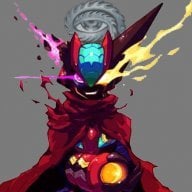
Originally introduced by Geoff Keighley with much enthusiasm at last year's Game Awards, it's been recently announced that the Highguard servers will be shut down on the 12th of March. The studio behidn the game, Wildlight Entertainment, explain this is due to being unable to establish a sustainable playerbase. Before the shutdown, the team will be releasing one final update, including a new Warden, weapons, account level progression, and skill trees. If you've yet to give the game a go, it is free to download on Steam, PS5, and the Xbox Series consoles, and will remain available fans and newcomers alike for its last days.

:arrow: Source
 
The assets for Paladins ended up being recycled into another game; I might wonder if that's going to happen again

Just think of all the work that went into all those models and animations and textures and so on – there's nothing obviously wrong with any of that. (But then, there's nothing about it that stands out either.)
 
  • Like
Reactions: DemiV
I feel for the devs given their responses on social media, they obviously put a lot of heart into the game. But I find it hard to believe that they couldn't recognize the game they were making was anything but another mediocre hero-shooter to cash in on the genre.
 
How many times are they going to make Concord again before they realize no one wants it?
SSJ4 Gogeta: "Well, it depends how many times they keep pushing the 'live service only' trend and losing."

(If you get the reference, you get an internet cookie.)
Post automatically merged:

laughs in TF2
Games that flop and die after between 2 weeks and a month and a half, vs. a game that, by Soldier's admission, does not "have permission to die".
 
  • Like
Reactions: codezer0
There's only so many players in the base and fewer still who are interested in trying out some new, deficient installment when there's more than enough better games to invest time in.

Unrelated, but Overwatch has been going through a sort of redemption arc recently. Never touched Overwatch 2 since release until recently and was pleasantly surprised by how good the game is now. And it's free, as is Marvel Rivals. No wonder new hero shooters just can't seem turn heads.
 
Highguard failed for a lot of reasons. I've been in the hero and tactical shooter mainstream for years. There's reasons that games like Valorant, Counter Strike, and Rainbow Six Siege stay around.

  • Highguard didn't have a clear objective. Looting resources, breaking shields, attacking with bombs. The gameplay loop lacked a lot of sense to it. CS, Valorant, and Siege have a clear-cut objective: protect the site or attack it and place the secondary objective (bomb, spike).
  • The punishment-reward system was off. Highguard is 3v3 with a long respawn timer. That long respawn timer breaks the gameplay. Marvel Rivals' respawn timer is adequate. You're out for a bit, but your team doesn't necessarily suffer as hard, since you lose 1/6th of the team. Highguard, you're a third of the team. Here's some punishment-reward systems from other games that have stuck around longer.
    • Valorant and CS: You're out. You died. Your team is down 1. However, a kill also places the enemy down 1. Everyone is on this semi-equal footing, so the game requires that skill.
    • Siege: You're on overwatch duty. You have access to cameras (which can be destroyed) or spectate your players. You're out, but you're still on the team. Since the utility you have access to can still be blocked, the footing remains the same.
    • Rivals: Respawning takes time. Your punishment is for overextending and dying. However, your team isn't at that large of a disadvantage.
    • Kills are rewarded, but the player is punished near equally, if that makes sense.
  • The maps were too large for the team size. Gear could be acquired virtually uncontested. While in games like this, absence of action is a part of the gameplay loop, this was a large amount of absence of action.
 
The punishment-reward system was off. Highguard is 3v3 with a long respawn timer. That long respawn timer breaks the gameplay. Marvel Rivals' respawn timer is adequate. You're out for a bit, but your team doesn't necessarily suffer as hard, since you lose 1/6th of the team. Highguard, you're a third of the team. Here's some punishment-reward systems from other games that have stuck around longer.
  • Valorant and CS: You're out. You died. Your team is down 1. However, a kill also places the enemy down 1. Everyone is on this semi-equal footing, so the game requires that skill.
  • Siege: You're on overwatch duty. You have access to cameras (which can be destroyed) or spectate your players. You're out, but you're still on the team. Since the utility you have access to can still be blocked, the footing remains the same.
  • Rivals: Respawning takes time. Your punishment is for overextending and dying. However, your team isn't at that large of a disadvantage.
  • Kills are rewarded, but the player is punished near equally, if that makes sense.
And while not a hero shooter, I'd say Splatoon 3's respawn timers are adequate as well. The base respawn time is 7.5 seconds (counting from the moment you're splatted) in a 4v4 game, but considering you have the choice of either deploying at spawn or jumping to a teammate or beakon's position, it makes sense (and isn't as punishing as a long respawn timer in a team-based game where deploying from spawn is your only choice). There's even ways to adjust respawn times, such as:
  • Quick Respawn to reduce respawn times if you get consecutively splatted without splatting anyone yourself (obviously, resets upon splatting someone),
  • Respawn Punisher to increase respawn times (and special gauge penalty) of enemies you splat...at the cost of having increased respawn times (and special gauge penalty) yourself if you get splatted (so increased risk/reward, and stacks with Respawn Punisher from an enemy), or
  • Tacticooler Special, which gives you a super-short respawn time if splatted while its active, regardless of whether or not you splatted someone, in addition to its other effects (though getting splatted and revived does end its duration early). The best part is that this Special can be shared with the entire team once per deployment.
P.S.: the maps also aren't (for the most part) too large to make respawns severely punishing, either, and some even have multiple paths to leave spawn from to help counter spawncamping attempts.
 
I have little pity for them. From what I have read thus far, it seems like they had no other plan than "IMMEDIATE success on the scale of Apex or die". When one bets the entire farm on such a risky bet and has no runway to speak of, this is the inevitable outcome they sow and reap.

What's even more bizarre is that one of the heads of the studio made the claim that "player numbers don't matter" when their entire strategy (nature of a F2P competitive game) was solely predicated on it. Heck, the ostensible reason they made Wildlight Entertainment in the first place was because they were unhappy with EA not profit sharing with the staff who worked on Apex. Without the players, where were they expecting to get the money for said royalties, let alone fulfilling the expected returns of their investor Tencent? I guess it could have been an attempt at a brave front but it ended up illustrating the kind of hubris and delusion they were operating under.
 
Waiter! Waiter! More hero shooters please!
Big studios thinking they're being "risk averse" by chasing trends like this is so ridiculous, it's a 5-6 year development cycle for any game now, which means you're 5-6 years behind the trend from the start. People have already settled into games they enjoy coming back to regularly, or skipped the genre altogether. It's much less of a risk developing any singleplayer-focused game.
 
  • Like
Reactions: EPgrouch
Feel sorry for the Devs but surely the industry has to take note of this trend now. This can't keep happening.
In my opinion, the F2P model now needs a different approach than it used to, the market is saturated with bangers and even very experienced devs can’t hit the bullseye 100% of the time expecting instant success. Business 101 tells us that any newly-opened business in just about any industry can expect to operate at a loss for the first 1-2 years - that should be priced into the equation when making a game that “costs nothing” to start playing. Not only that, huge budgets and long development time makes this kind of software a literal Hail Mary - either it makes money or the studio shuts down. That’s simply *not* healthy, approaching development expecting to make the second Fortnite is foolish. Spoilers, very few games can replicate even a fraction of a success story like that. Tl;dr - what’s needed are smaller teams, smaller budgets, shorter turn-around and *the expectation* of losing money before the game amasses a solid and loyal player base, and the latter may require not one, not two but multiple content drops to actually lure players in. Overnight success is the exception, not the rule. That, and… well, making a good game that’s actually fun to play is a good start. Developers should try that too.
 
  • Like
Reactions: ChronosNotashi
In my opinion, the F2P model now needs a different approach than it used to, the market is saturated with bangers and even very experienced devs can’t hit the bullseye 100% of the time expecting instant success. Business 101 tells us that any newly-opened business in just about any industry can expect to operate at a loss for the first 1-2 years - that should be priced into the equation when making a game that “costs nothing” to start playing. Not only that, huge budgets and long development time makes this kind of software a literal Hail Mary - either it makes money or the studio shuts down. That’s simply *not* healthy, approaching development expecting to make the second Fortnite is foolish. Spoilers, very few games can replicate even a fraction of a success story like that. Tl;dr - what’s needed are smaller teams, smaller budgets, shorter turn-around and *the expectation* of losing money before the game amasses a solid and loyal player base, and the latter may require not one, not two but multiple content drops to actually lure players in. Overnight success is the exception, not the rule. That, and… well, making a good game that’s actually fun to play is a good start. Developers should try that too.
I pretty much agree with this. Not every game can be an Undertale or a Clair Obscur or a Shovel Knight or a Fortnite or an Overwatch or a "whatever game happened to become an overnight success".

Which is why trend-chasing never truly works: it relies on people not getting bored of/frustrated with a trend long after the honeymoon period's over, and not moving on to a new trend.
 

Site & Scene News

Popular threads in this forum