thaddius' Console Roast 2014 Edition - Round 5

  • Thread starter Thread starter thaddius
  • Start date Start date
  • Views Views 5,593
  • Replies Replies 56

Round 5 - Worst Console of the Fourth Generation

  • The NEC PC Engine/TurboGrafX-16/TurboGrafX

    Votes: 12 2.7%
  • The Sega Genesis/Mega Drive

    Votes: 6 1.4%
  • The Super FAMICOM/Super Nintendo Entertainment System

    Votes: 10 2.3%
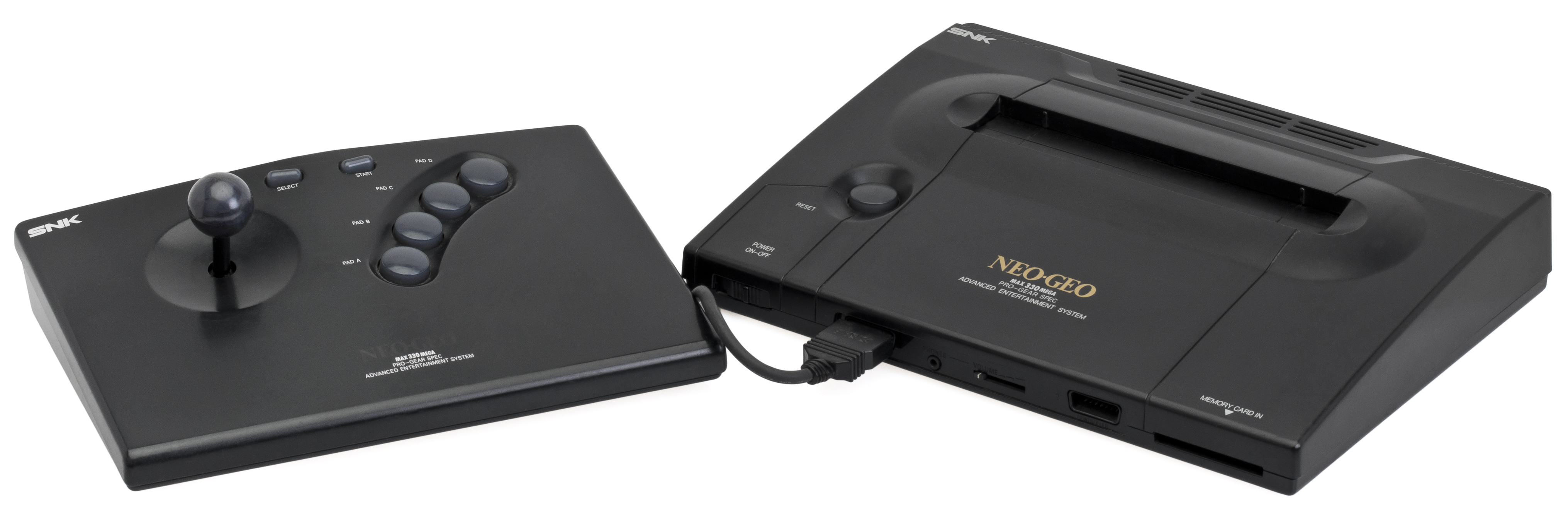
  • The SNK Neo Geo

    Votes: 14 3.2%
  • The Phillips CDi

    Votes: 400 90.5%

  • Total voters
    442
  • Poll closed .
I have a Goldstar 3DO that is in very good condition and plays everything perfectly. I just can't bring myself to selling it because I would probably miss it and want to play one of the handful of games on it that weren't crap.
 
That's incorrect. The CD-i was released in 1991 and it was a console of the fourth generation.


Nope, it is your position that is incorrect...

1) Saying the CD-i was released in 1991 is kind of misleading. Since it was released 28 days before the end of the year, almost 1992, rushed for Christmas...

2) A generation of consoles is not about the time of release, but about a relative performance bracket. The CD-i was vastly more powerful than the rest of the systems, there was absolutely no comparison. 32 bit, 1mb main ram, cd rom, it is a joke to compare this to the 16bit systems released a few years earlier... It could only be compared to the likes of PSX and 3DO...

Another way to measure this, is by comparing the games. Suppose there was a CDROM AAA game that used 100% of the CDI's power, could it be ported to any other of the 16bit systems? The answer is obvious i believe...

For example, i don't consider the Wii a seven generation system. It was not, it was just an overclocked gamecube with a bit more RAM and a disk format that cought up PS2 and XBOX a few years late. It could never hope to play AAA multiplatform titles of the seventh generation without massive alterations to quality.

3) Since it was mentioned on this thread, the CD-i's classification as "4rth gen" comes from Wikipedia, hardly the absolute authority on the matter, let alone any matter... It is simply wrong. The CD-i was definately early fifth gen.
 
A generation of consoles is not about the time of release, but about a relative performance bracket.... The CD-i was definately early fifth gen.

Both of these statements are false beyond belief. I don't think there's an "official" definition of a console generation in a dictionary anywhere, but the general consensus among people is more than enough. Beyond that, the very word "generation" implies a time frame, not performance bracket. if it was about power and performance, it wouldn't be called a generation at all. To suggest otherwise is more than a little bit ridiculous.
 
I'm afraid that your personal feeling does not change the global consensus, sorry.

The CD-i was originally intended as a SNES expansion, not a brand-new system, that's for starters. The performance bracket has very little to do with system generations, it's more about the cycle of succession within given console families, and since the CD-i was Philips's first foray into the console business and it was released within the time frame of the fourth generation, it's considered to be a fourth generation system, succeeded by Philips's version of the 3DO.
 
  • Like
Reactions: JulietStMoon
There's only one console worse that the CD-i (during this time period), and it was the Memeorex/Tandy VIS. The CD-i had a couple (literally two or three) good games; but with the VIS there isn't one good game.
 
Getting back off topic for a while, the thing I really liked about the 3D0 was the daisychaining of gamepads. I remember seeing one on a TV show and all controllers had an additional port for a new controller, alleviating the need for multitaps. It's a shame this never caught on; I find it criminal how few USB peripherals have built in hubs. I've seen a couple of keyboards on ebay but none in stores... no gamepads, modems, or cams ever featured USB hubs/'passthroughs' as far as I'm aware. Even a single USB port in a keyboard would be insanely useful.
 
These polls are always a joke with 1 choice being the stand out worst no matter what anyone says. I'm just speculating here but any of the votes that were for any system other than CDi were jokes and people having a good laugh.

What possibly mean? The SNES was a complete shitbox and didn't have a single thing going for it. /sarcasm

Not trolling now: Yeah, the CD-i is barely a console, but at least we're at the point where the contenders are known, so I'm not calling shinanigans
 
  • Like
Reactions: JulietStMoon
You're all too young for some of the previous consoles, I suppose.

I'm sorry that video game history is so disappointing for you folks. :P
 
It's not a matter of age, really. Every generation, whichever it may be, always has underdog system - that's what makes them bad, and this is a poll about the worst systems in each generation. It's not thaddius's fault that in this generation every system except the CD-i was either good or at least salvagable, that's just how it actually was. :rofl2:
 
  • Like
Reactions: JulietStMoon
I'm afraid that your personal feeling does not change the global consensus, sorry.

The CD-i was originally intended as a SNES expansion, not a brand-new system, that's for starters. The performance bracket has very little to do with system generations, it's more about the cycle of succession within given console families, and since the CD-i was Philips's first foray into the console business and it was released within the time frame of the fourth generation, it's considered to be a fourth generation system, succeeded by Philips's version of the 3DO.

It's not a "feeling". It is thinking

I explained the reasons why. No need to repeat them.

But i will ask you this:

If i release an 8 bit console today, similar to the NES, will it be a current gen system? What about all those second rate consoles that are sold for cheap? Are those 8th gen?

CD-i was 5th gen. Get over it

Both of these statements are false beyond belief. I don't think there's an "official" definition of a console generation in a dictionary anywhere, but the general consensus among people is more than enough. Beyond that, the very word "generation" implies a time frame, not performance bracket. if it was about power and performance, it wouldn't be called a generation at all. To suggest otherwise is more than a little bit ridiculous.


Well, it is simple, really. The CD-i marked the beginning of the 5th generation... Who made 1993 the beginning? On what basis?

No 16 bit system (except the Jaguar) was released after 1991. So all you need to do is say that the CD-i with an almost 1992 release was the first 5th gen console. Problem solved...
 
It's not a "feeling". It is thinking. I explained the reasons why. No need to repeat them. But i will ask you this: If i release an 8 bit console today, similar to the NES, will it be a current gen system? What about all those second rate consoles that are sold for cheap? Are those 8th gen? CD-i was 5th gen. Get over it
Only according to your completely arbitrary reasoning. The system was not made to compete with any of the 5th generation systems - in fact, it was quickly abandoned due to being a commercial failure, at which point Panasonic bought the license to manufacture 3DO hardware and jumped ship to the Panasonic 3DO, which is their entry in the 5th generation. Performance gaps are completely irrelevant when it comes to console generations - the TurboGrafx-16/PC Engine is 8-bit and can't hold a candle to the processing power of the SNES or the Mega Drive, but it's a 4th generation system because it was released with the explicit intention of being competitive in that particular time frame. Similarly the N64 is 64-bit and greatly overpowers the PlayStation and the Sega Saturn in terms of raw processing power, however it's a fifth generation system just like the other two. The Wii U is a whole generation behind the XBox One and the PS4 in terms of processing power and at least two generations behind in terms of hardware, but it's a current generation system nonetheless. So yes, if there was a company that would release an 8-bit, retro-style system this generation that would be unique and not a clone of previous hardware, it would be considered a current generation system. An oddball, sure, but a current generation system nonetheless. Processing power is not a measurement of whether or not a system belongs to a given generation - they never were and they never will be considered the make or break argument.
Well, it is simple, really. The CD-i marked the beginning of the 5th generation... Who made 1993 the beginning? On what basis? No 16 bit system (except the Jaguar) was released after 1991. So all you need to do is say that the CD-i with an almost 1992 release was the first 5th gen console. Problem solved...
The year 1993 was picked on the basis of the release date of the 3DO, the first 5th generation system. This was the point in history when previous generation systems have reached their limits and works on new systems were either complete or in the final stages. The CD-i didn't mark the beginning of anything other than Panasonic's short-lived career in making video game systems. In addition, the Atari Jaguar is not a 16-bit system - it can execute 16-bit, 32-bit and 64-bit code and although arguably, it's considered a 64-bit system. The contemporary trend of creating consoles and computers alike was to spread given types of operations to separate chips or ALU's and you can see that in the Jaguar - it's powered by three major chips, two of them divided into several ALU's. The first chip named Tom is separated into a 32-bit graphics processing unit, a 64-bit Object Processor, a 64-bit Blitter for high-precision logic and a DRAM controller which can work in 8, 16, 32 and 64-bit modes. The second chip, Jerry, houses a 32-bit DSP and some additional hardware for joystick control and sound-related functionality. The last processor, the well-known and loved Motorolla 68000 chip is a 16/32-bit general purpose processor which acts as a manager between the former two, but could be used for game logic (and in fact effectively was used to drive logic in most of games, which is why they're so terrible - developers were not familiar enough with the Jaguar architecture to effectively utilize its 32-bit and 64-bit functionality, so they did what they did best - programmed for the 68000 because they knew it well). In any case, no matter how you look at it and whether you believe that the Jaguar is a 32-bit console or a 64-bit one, it's certainly not a 16-bit system by any stretch of the imagination. I personally hold the view that if a system can perform a 64-bit operation, it's a 64-bit system, point. I've had this conversation a hundred of times by now, I think.

In any case, we can have this conversation for the next few decades and we'll still stand by our opinion, so we'll have to agree to disagree. Being late to a given generation doesn't meant that you're starting a new one - it just means that you're late for the party.

 

Site & Scene News

Popular threads in this forum