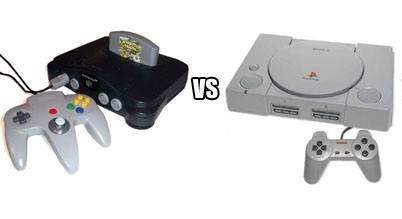
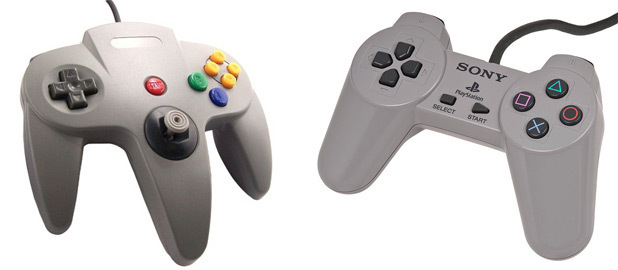
I think most of the confusion lies in the fact that when you think of success you think too much of commercial success. The n64 and the gamecube failed to achieve significant market share and they failed to attract the interest of game developers. But they both had some importance in their time.
I don't know much about the gamecube, but about the N64:
- It popularized the use of analogs and vibration in controllers
- It had games like Super Mario 64, 007: Goldeneye and Super Smash Bros whose elements were a large influence to many other games
- Although it was not a commercial success, this console managed to become very popular gaining a cult status
I would like to add that if we judge success exclusively by numbers, we might get to wrong conclusions like the case of many painter, writers and artists who largely influenced art but were not recognized during their lifetime and, thus, didn't make a penny off their work. One classic example is the portuguese writer Luíz Vaz de Camões, which is the Shakespeare of the portuguese language, but died starving in the streets.
If I thought specifically of commercial success, I'd think of profits and again, that's not what I'm talking about. Profits aren't just measured by sales - they're measured by the relation between sales and the profit margin.
If anything, I'm talking about the market share which is not a measure of profit, not by any means - it is a measure of popularity and the userbase at the time of release.
The N64 may have introduced the use of the ana
log stic
k (only had one, and it was introduced by a much earlier console series but let's just roll with the N64 since the contemporary form-factor of the analog stick is indeed derrived from the N64 one) but the console that popularized its use and the setup we know today is the PlayStation with its DualShock controller. The controller was in fact so popular that it barely changed and its design continues to be used to this day.
I already said that it had about 30-40 games worth mentioning
(at least on first glance) in its library and SM64, GoldenEye and SSB were three of them - that's still not a whole lot in comparison.
Very popular is not the word I'd use with its market share and its status may be cult now but so what? I will continue to judge the console by its numbers as it's the measure of a given console's success or failure during its time.
To have a better look, and what better way to do that than by using pie charts?
Here we have a global piechart where
Saturn the Embarrasment and
Nintendo 64 the Failure can clearly be seen in comparison to our great victor, the PlayStation. There is a grand total of 144,28 million consoles out there, the PlayStation having 71.03% of this pie, the Nintendo 64 having 22,82% of it.
We're going to ommit the Saturn in the rest of our market share analysis from now on
because we should not disturb the dead, plus it only really sold well in Japan.
In Europe, the Nintendo 64's situation is completely dramatic:
There are 40,12 million PlayStation users and only 6,76 million Nintendo 64 users
(85.58% consoles are PlayStations) - it's hardly
"limited success", it's actually quite tragic.
The situation isn't any better in Japan:
Here we have 21,59 million PlayStation users and only 5,54 million Nintendo 64 users
(79,57% consoles are PlayStations) . It's definitely not
as tragic as in Europe but it's certainly nothing to boast about.
...but if things weren't that great for the Nintendo 64... why does the Internet love it? Let's have a look. I bring forth to you the
one and only region where this console didn't completely kick the bucket:
Yup, America. Being an American invention and being predominantly controlled by American users and media, the Internet usually shows us the American perspective on the Nintendo 64. In North America the system did
considerably better than anywhere else, selling 20,63 million units in comparison to the 40,78 million units of the PlayStation
(66.40% consoles are PlayStations, lowest percentage in all three regions) - that's more than the cumulative sales of the
entire Japanese and European sales.
With those pie charts in mind, we can blatantly see that the only place where the Nintendo 64 was relatively
"successful" was North America - no objective person is going to say that the system recieved global praise when for all intents and purposes it
did not. The Nintendo 64 was widely ignored in Europe and barely noticed in Japan - those are two out of three regions where it was sold.
Again,
regardless of whether or not the console was a
commercial success for Nintendo, meaning whether or not it brought profits, it was not
popular - it did not have a considerable share of the market in any of the regions and as such its userbase was very limited. I
can understand users from North America
thinking that since the Nintendo 64 was
moderately popular in their region
(reaching half the popularity of the PlayStation, in fact) it
must've been popular elsewhere too, but in-depth analysis shows that it wasn't.
North America is
not the belly button of the world - when you look at the situation from a global perspective, the Nintendo 64 was
hardly a successful system and its popularity stems from
the only region where it sold moderately well, meaning North America - a highly-influential area from a cultural perspective due to the spread of the Internet and its model of Mass Media.
Now, you're going to argue that
"the Nintendo 64 was a successful system because it brought profits to Nintendo - it made money so it was not a failure", but that's
crippled logic. Why? Let me elaborate. Is a well-known, widely-popular, universally-acclaimed Actor #1 who acts in numerous plays and movies
less successful than Actor #2 who was lucky enough to star in one film, happened to make money off it and never starred in any other film ever again?
No, that's not the case. Actor #1 is successful, Actor #2 is a nobody who starred in *1* film that happened to sell.
Moreover, everybody seems to mention the
alleged profits the Nintendo 64 generated but frankly, I'm yet to see any data
actually showing them. All I found were
consolidated sales of the Game Boy and the Nintendo 64 - that's vague data because the Game Boy
sold great wheras the Nintendo 64
didn't sell. You can't use that as an argument, the profits may have been generated by the Game Boy, moreover, they're directly connected to the profit margin as well as the licensing fees. Where is the data you people continuously speak of and can I have a look? Because if you can't support an argument, you can't use it.
//CHART_WARS, because pie charts are AWESOME!