'Death Howl' Impressions
Indie developer The Outer Zone and publisher 11 bit studios recently released Death Howl, which they describe as a “Soulslike open-world deckbuilder”. Does this genre mashup deliver more than a word salad?
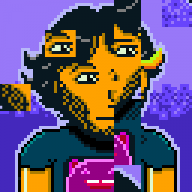
Death Howl‘s story revolves around Ro, a grieving mother, who has just lost her son Olvi. Unable to accept this fate, she ventures into the depths of the Spirit World’s four realms, trying to wrestle her son back from death's grip.


As a “Soulslike”, Death Howl aptly explores dark and personal topics. While its choice of isometric pixel art might be unconventional for this genre, this does endow it with an original presentation, which is complemented by a fitting soundtrack. I found the retro look, with its underlying dark story and peculiar, animalistic realm, to be an appealing prospect.
Across the Spirit World’s four realms and 13 distinct regions, you will be able to move Ro around in an open-ended fashion. The term “open world” might be pushing it, but you are given freedom to roam around nonlinearly and collect items; that is, until you encounter enemies.


Indeed, the realms are filled with restless spirits that will impede Ro’s quest. To face them, our protagonist has at her disposal a deck of 20 cards. The cards enable her to perform actions from attacking to buffing Ro’s skills. Encounters, which are turn-based, take place in a grid-based map, allowing you to move and strategise based on your cards.
Each turn, you are dealt a hand of 5 cards, which you can play according to their individual mana cost. At the end of your turn, you discard your hand, and the spirits will make their moves. At the end of a combat, you can heal yourself up at a Sacred Grove (which also works as a fast travel point), but this will respawn enemies, meaning that you have to face them again.


Drawing from the Soulslike genre, combat is challenging, often unforgiving, especially when starting off. It doesn’t help that you need to get a grip on the mechanics and face tough spirits from the outset. There is, however, a sense of accomplishment when you come out of a battle barely hanging to life, only for this to drown when you realise that you have to face the same spirits again if you heal up.
As you progress across the realm, you can find and craft more cards that let you adopt different strategies. You find crafting elements by defeating enemy spirits in combat or by exploring the realm. This ties in the deck-building mechanics well with the game's nonlinear exploration and combat. New cards and decks can make encounters more fair, but only after having spent several hours toiling through the recurring challenges.


Death Howl kind of lost me with this unforgiving nature and the need to tackle encounters over again. As a more story-driven deck builder and an interesting combination of gameplay, it does offer something unique. However, I think it will truly appeal to the subset of fans of its genre word salad rather than those interested in the individual genres.